



Urine odours, faeces and pests: how to get rid of biological odours
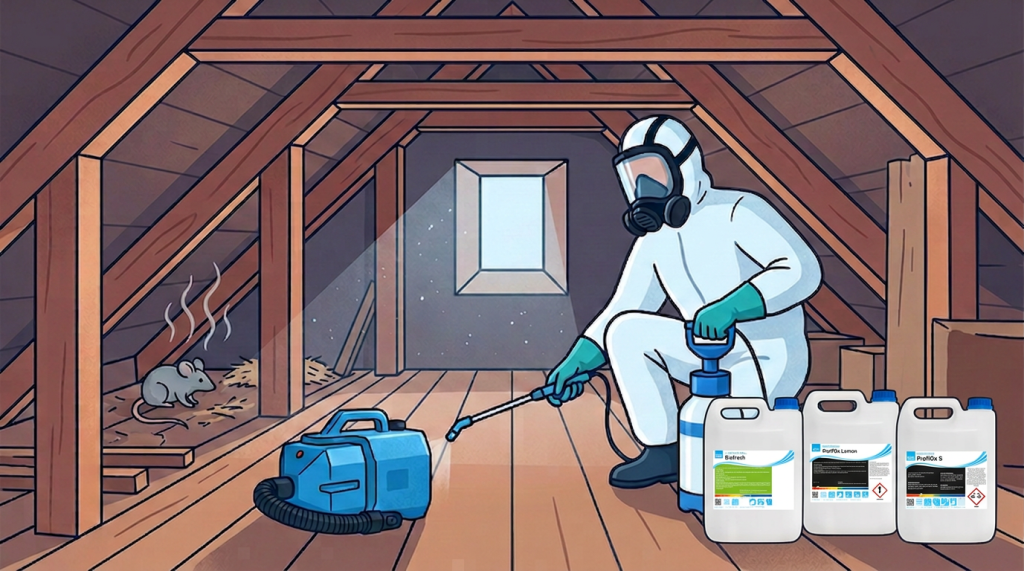
The smell of urine, faeces, vomit and pest droppings can be some of the most difficult things to remove during a decontamination job. The odour often penetrates deeper than is visible to the naked eye, particularly in porous materials such as timber, concrete, chipboard, insulation and textiles. That is why simply washing the surface once is rarely enough. First, the source must be removed. […]
Grade 3 smoke injury: dry fogging for severe burn injuries
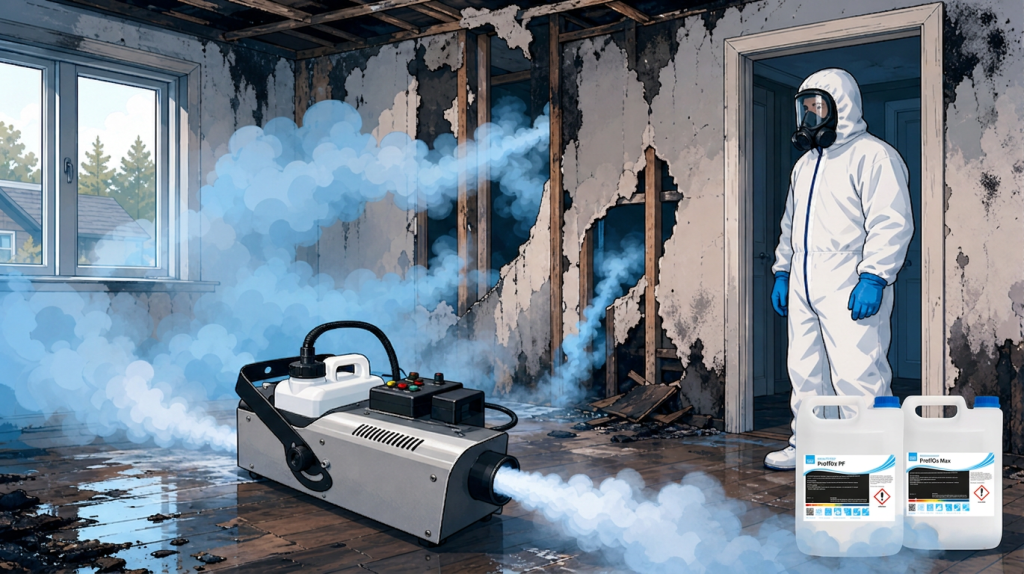
In cases of severe soot, smoke and fire damage, the odour can become embedded in places that cannot be reached with a cloth, washing or a wet fogger. It can linger in cavities, ventilation systems, porous materials and structures long after the visible surfaces have been cleaned. This is where dry fogging comes in. Dry fogging is used as a final odour treatment once everything that can be removed has been cleaned, […]
Grade 2 soot damage: restoration work in cases of obvious soot, smoke and fire damage
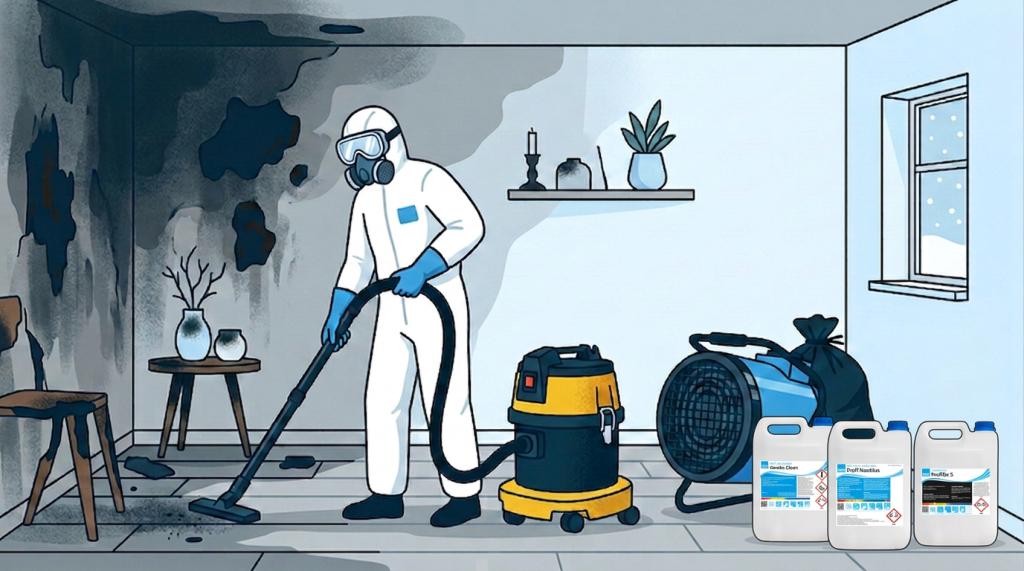
At soot level 2, the damage is evident. This may include caked-on soot, discolouration, charring, melted materials and a smell of smoke that has permeated washable or porous surfaces. In such cases, simply washing the surface is not enough. First, the damaged material must be removed. Loose soot must then be removed using a dry method, before the surfaces are washed, properly heated and, finally, deodorised. This […]
Grade 1 soot damage: surface cleaning for minor soot and smoke damage
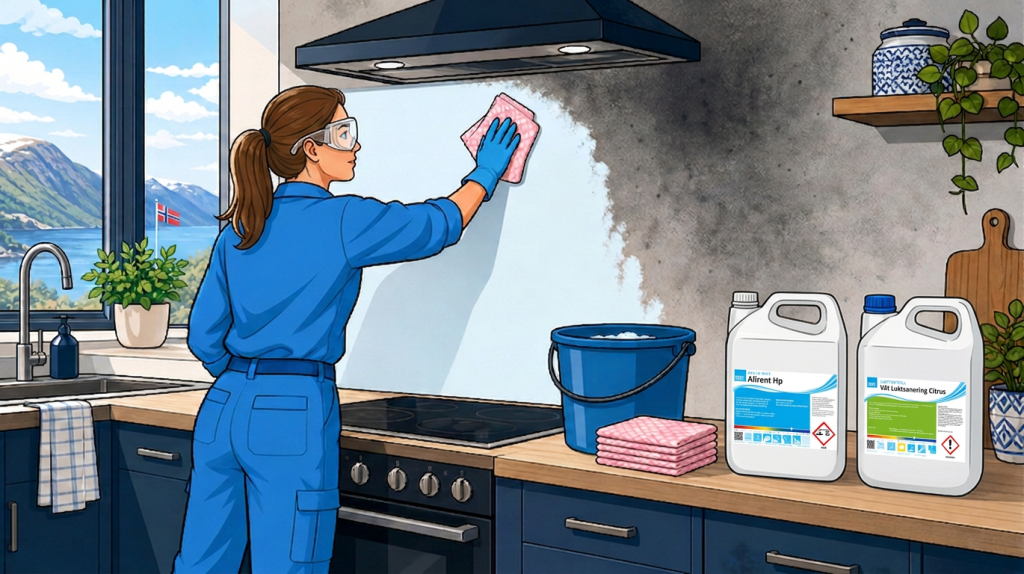
Soot Grade 1 is the mildest form of soot damage. It may consist of a thin layer of soot caused by burnt-on food, kitchen fumes, cigarette smoke or back-draft from a pipe. Although the damage is minor, the order of steps is important. If you start straight away with water, loose soot can be rubbed into the surface and become more difficult to remove. That is why the method begins with dry […]
Mould remediation step by step: from the source of damp to controlled humidity
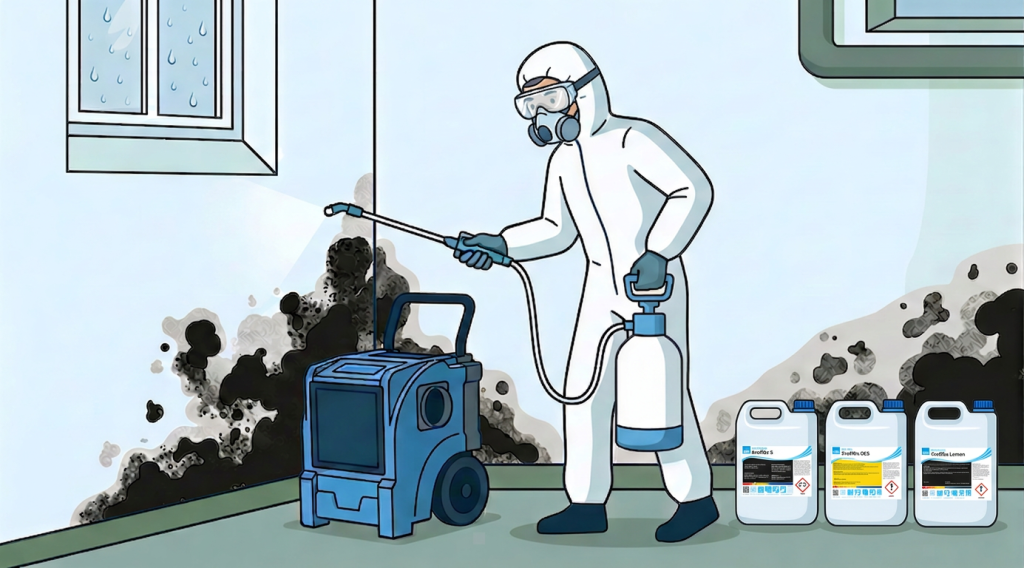
Mould removal is not just about washing away what you can see. Mould is almost always a sign of a damp problem. If the damp is not removed, the mould will often return, even if the surface looks clean straight after washing. That is why mould removal must be carried out in the correct order. First, the cause must be identified and rectified. The area can then be pre-treated, cleaned, […]
Odour control for biological odours: the method, from first aid to dry fogging
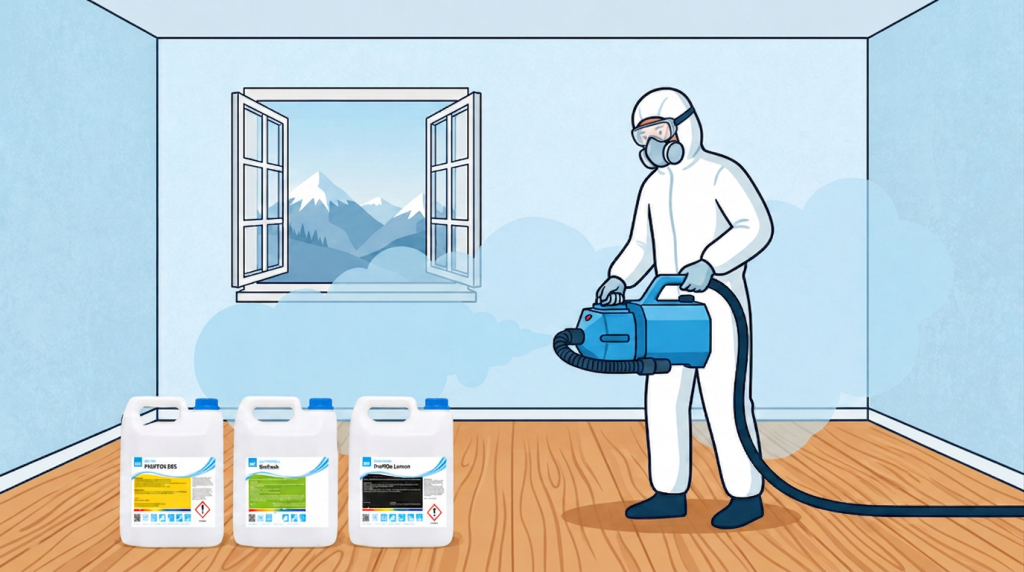
Biological odours caused by death, animal carcasses or rotting food are among the most challenging issues you will encounter in decontamination work. The odour often penetrates deep into porous materials, cavities and surfaces that have been in contact with organic contamination. That is why simply masking the odour is not enough. The source must be removed, the surfaces must be cleaned, and odour treatment must be carried out in […]
Sewer smell following a drain blockage? Here’s how to get rid of it in five steps
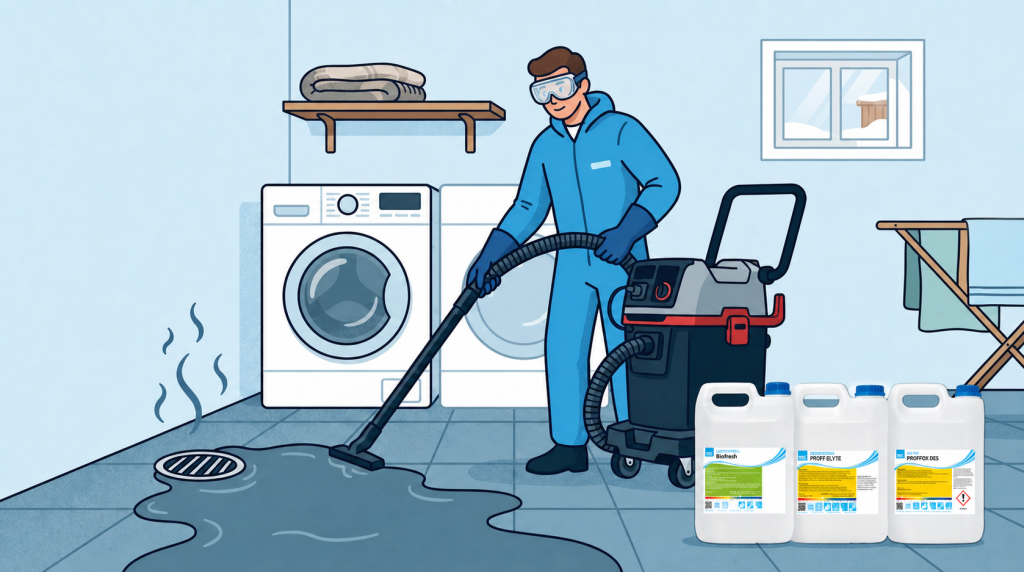
Sewer odours rarely disappear with ordinary cleaning. Following a backflow, leak or fault in the drainage system, the odour can become embedded in floors, walls, grouting, drains and other washable surfaces. In addition, sewage may contain bacteria, viruses and other infectious agents. The work must therefore be carried out in the correct order. First, the source must be stopped. Then, the sewage and contamination must be removed, and the surfaces washed […]
Are you prepared in the event of water damage?
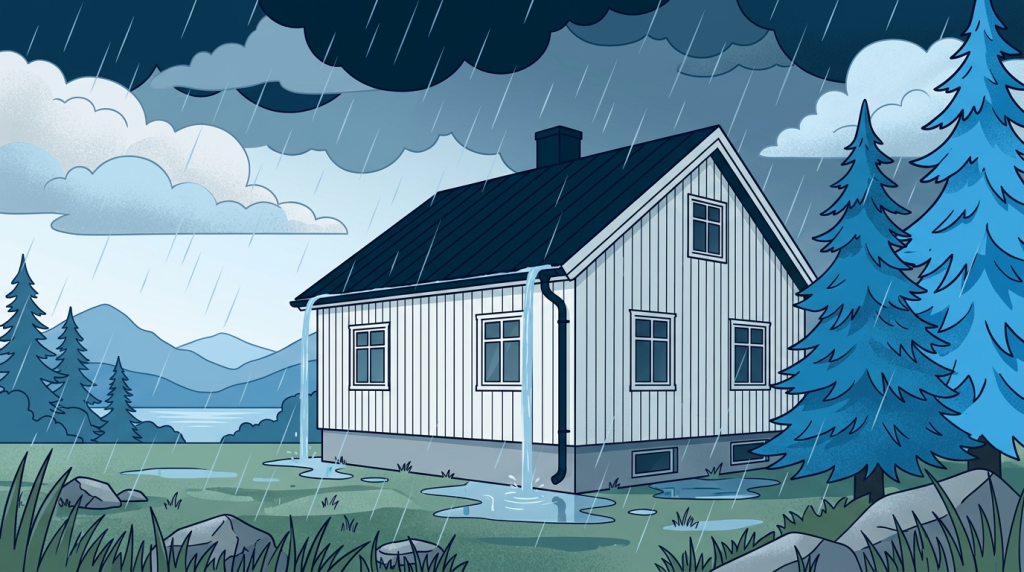
There’s been a lot of bad weather in Norway recently, and more rainfall is expected as autumn progresses. Water damage rarely gives any warning. Once it does occur, there is one thing in particular that determines how extensive the damage will be: how quickly and appropriately you respond. This guide shows you the five most important steps to minimise the damage, […]
From chaos to control: The complete guide to modern damage restoration

Why read this guide? Damage always occurs when you have the least amount of time: the smell of smoke settles in the wall, mould blooms behind the panels, or sewage fills the basement. Your goal is simple - to stop or freeze the damage and prevent the loss of value quickly and safely, without creating new problems. This guide will help you from initial inspection to [...]
How Proff Norway helps you with damage restoration

As a damage restoration specialist, you know that time = money. Proff Norge has proven methods, effective products in all price/performance categories, and lightning-fast support and delivery times. This means you will succeed the first time – and right away!