



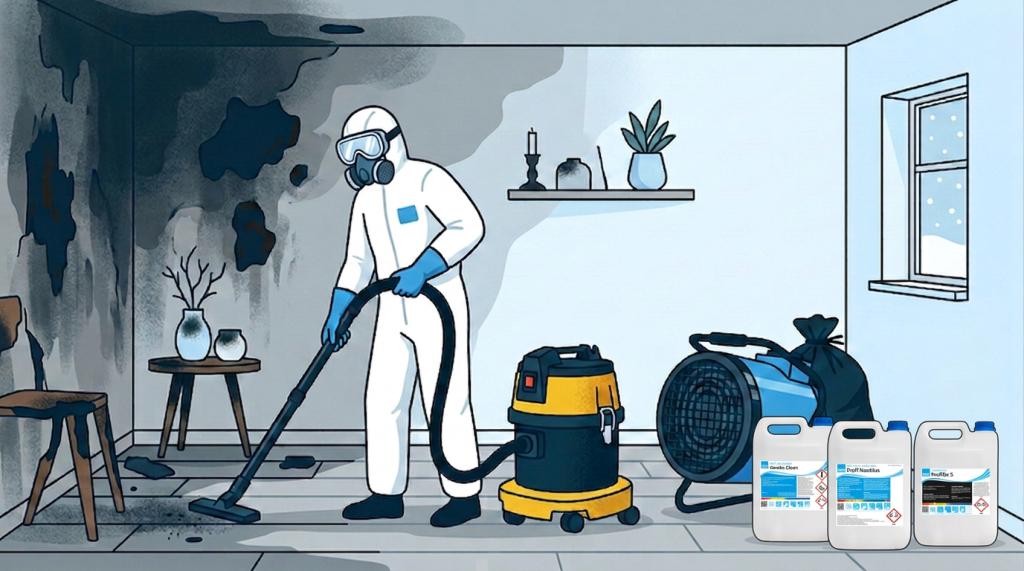
At soot level 2, the damage is clearly visible. This may include caked-on soot, discolouration, charring, melted materials and the smell of smoke that has permeated washable or porous surfaces.
In that case, simply washing the surfaces is not enough. First, the damaged material must be removed. Then, loose soot must be brushed off before the surfaces are washed, properly heated and, finally, deodorised.
This method is suitable for fire and smoke damage where there is more than just a thin layer of soot, but where the odour has not yet penetrated so deeply into cavities and structures that dry fogging is the primary course of action.
Soot level 2 requires more thorough cleaning than usual. Soot, fire debris and chemical residues must be dealt with correctly from the outset.
Important before you start
- Cordon off the area and keep people and animals away from the work site
- Wear chemical-resistant gloves, safety goggles and respiratory protection in accordance with the risk assessment and the SDS
- Take breaks during work when the method allows it
- Choose one cleaning product at a time – do not mix chemicals
- Always test colour- and bleach-sensitive surfaces first
- Do not allow the cleaning solution to dry on the surface
The most important thing is not to start using water too soon. Loose soot should be removed dry first.
Download the methodology poster as a PDF
Would you like the whole method summarised on a single page? Download the method poster for soot level 2. It contains five steps, product selection, mixing ratios and a checklist for verification – designed to be printed out and used on site.
When is it soot level 2?
Soot Grade 2 is used when the damage is more pronounced than light surface soot. Typical signs include visible and stubborn soot, discoloured surfaces, charred, loose or melted materials, a smell of smoke in washable or porous materials, and the need for dry cleaning, washing and odour removal.
If there is only a thin layer of soot on the surface, you can soot level 1 That should be enough. If the smell of smoke is still lingering deep within cavities, ventilation systems or structural elements after a thorough clean, move on to soot level 3.
Quick product selector
| Situation | Recommended product |
|---|---|
| Fire caused by vegetable fat or oil | Smoke Clean |
| Mineral oil, fire or heavy soiling | Pro Nautilus |
| Odour on water-resistant, washable surfaces | ProffOx |
| Strong odours in porous materials | ProffOx S |
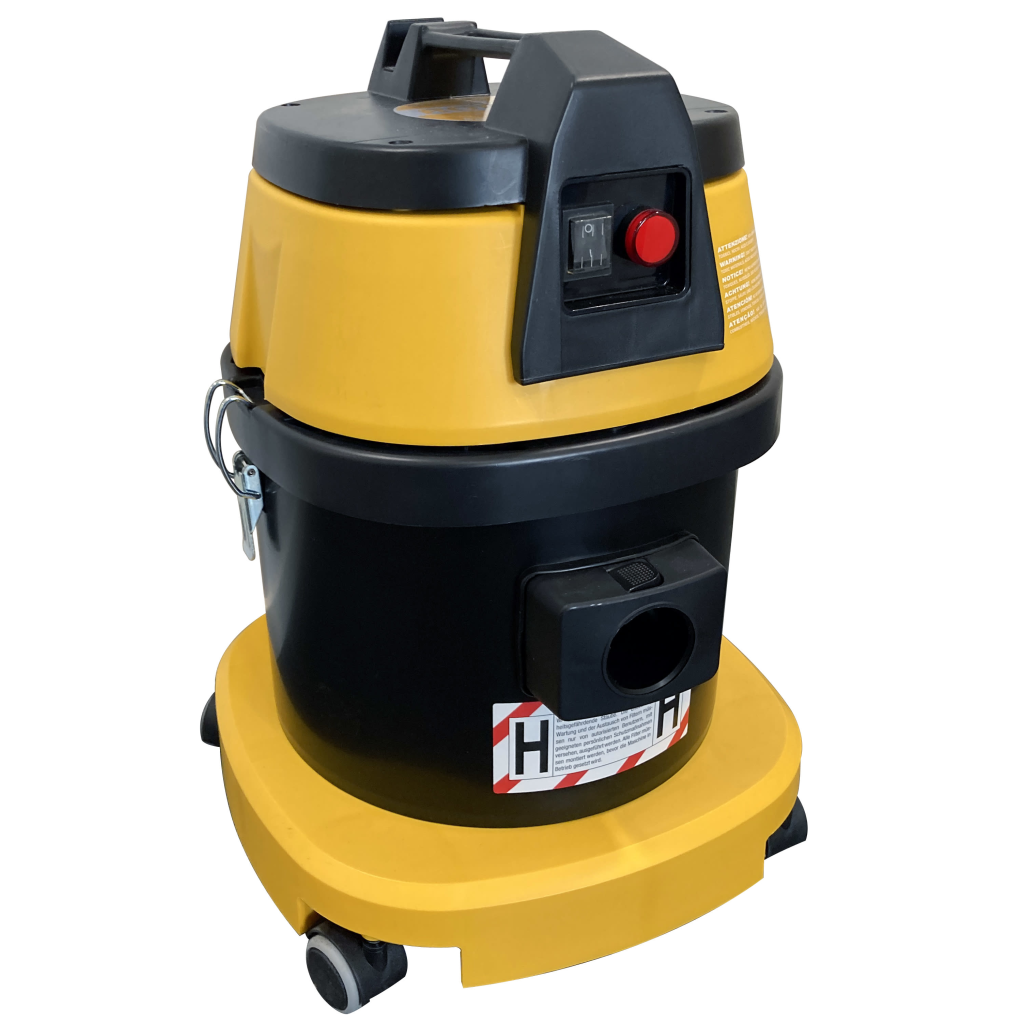
| Remove soot before washing | Chemical-cleaning cloth and H-class industrial vacuum cleaner |
| Controlled heating of rooms and materials | Fan heater |
Decontamination in five steps
The order is crucial. Dust first, then wash, and finally deodorise.
1. Secure the area and remove any damaged material
Start by cordoning off the area and assessing the extent of the damage. Remove burnt, charred, loose or melted materials that cannot be cleaned safely. These may include building components, fixtures and fittings, insulation, plastic, textiles or other materials that continue to emit odours or contaminants.
Make a note of what you’re discarding before you carry on. The aim is to remove anything that can’t be saved, so that you don’t waste time and cleaning products on materials that will still give off a smell.
2. Clean with a dry cloth before using water
Remove loose soot before wet cleaning. Use a dry chemical cloth and an H-class industrial vacuum cleaner. Work from top to bottom, so that any soot that comes loose does not fall onto surfaces that have already been cleaned.
Do not use water on loose soot. This can cause the soot to become smeared into the surface, making it much more difficult to remove. And do not blow the soot away with compressed air or a blast of air – the aim is to collect the soot, not to scatter it.
3. Heat the room and materials in a controlled manner
Once the dry cleaning has been carried out, the room and materials can be heated prior to wet treatment, where the method requires it. Maintain a stable temperature of approximately 25 to 30 °C in the room. Warm surfaces allow the chemicals to work more effectively, whilst cold surfaces often result in poorer results.
Always heat the room and the materials, not the chemicals. Switch off the fan heater before spraying or fogging – this reduces the risk and gives you better control during application.
4. Choose a detergent
Choose a cleaning product based on the type of soot and fire damage you are dealing with, and use one product at a time.
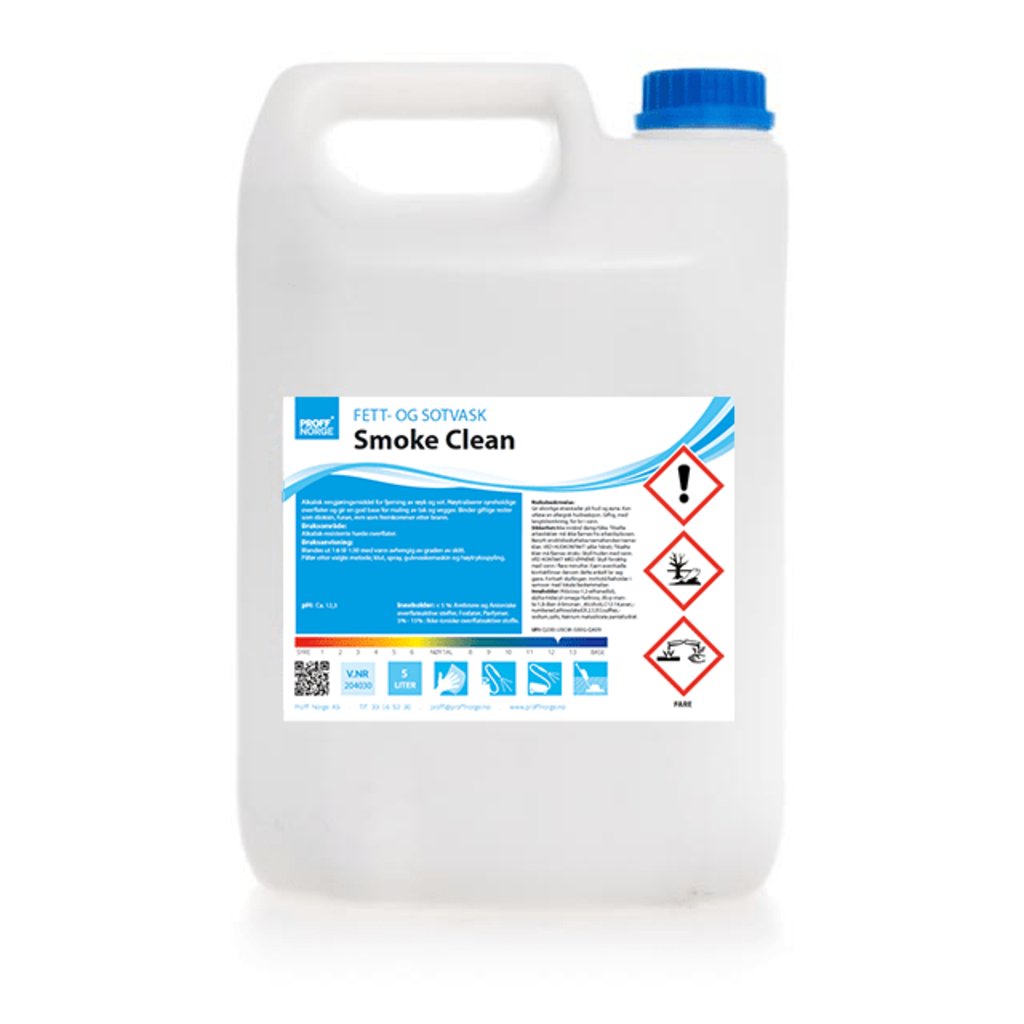
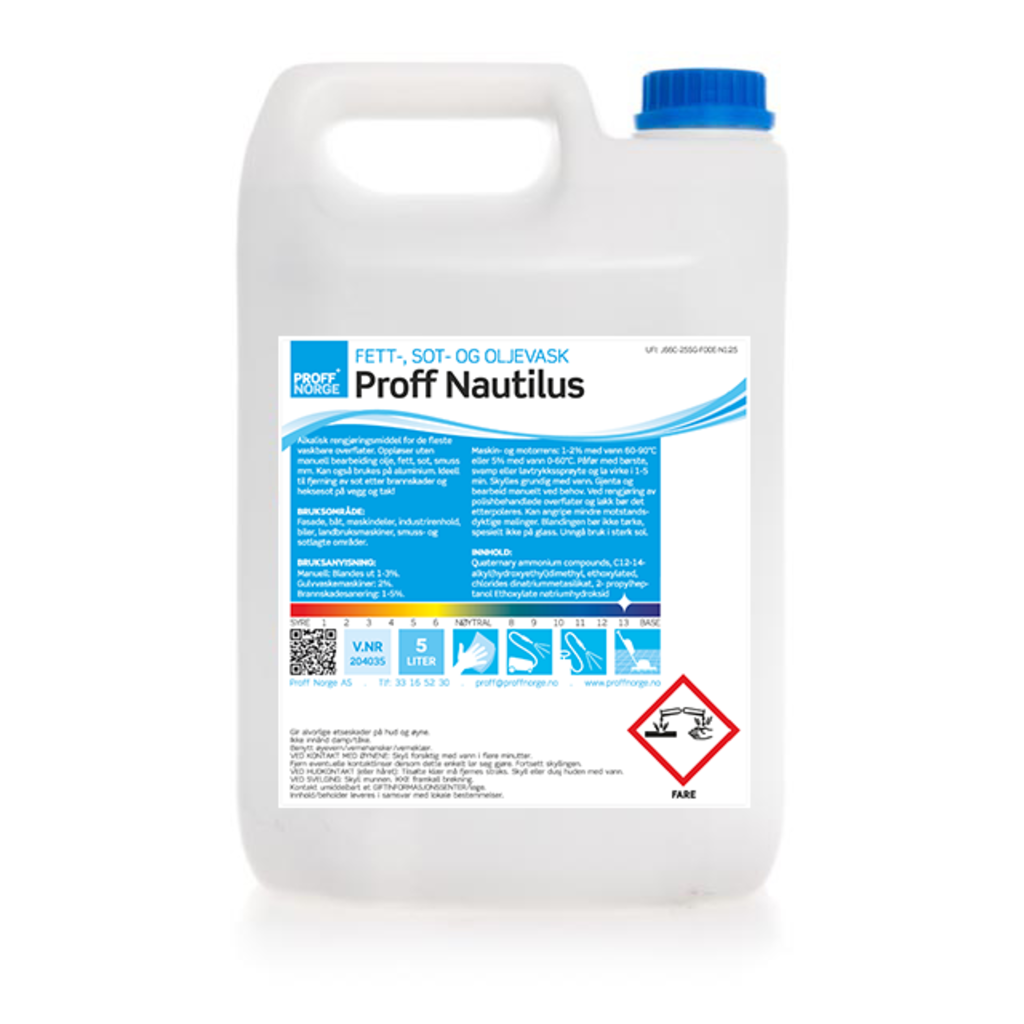
Use Smoke Clean for soot and fire damage, particularly following fires involving vegetable fats and oils. Dilute at a ratio of 1:6 to 1:30. Use Proff Nautilus for soot and fire damage where mineral oil or heavy soiling is part of the damage. Dilute at a ratio of 1:100 to 1:20.
Always test on a small area first, particularly on painted, varnished, colour-sensitive or bleach-sensitive surfaces. Apply, work in and rinse as required. Do not allow the mixture to dry on the surface.
5. Odour removal after cleaning
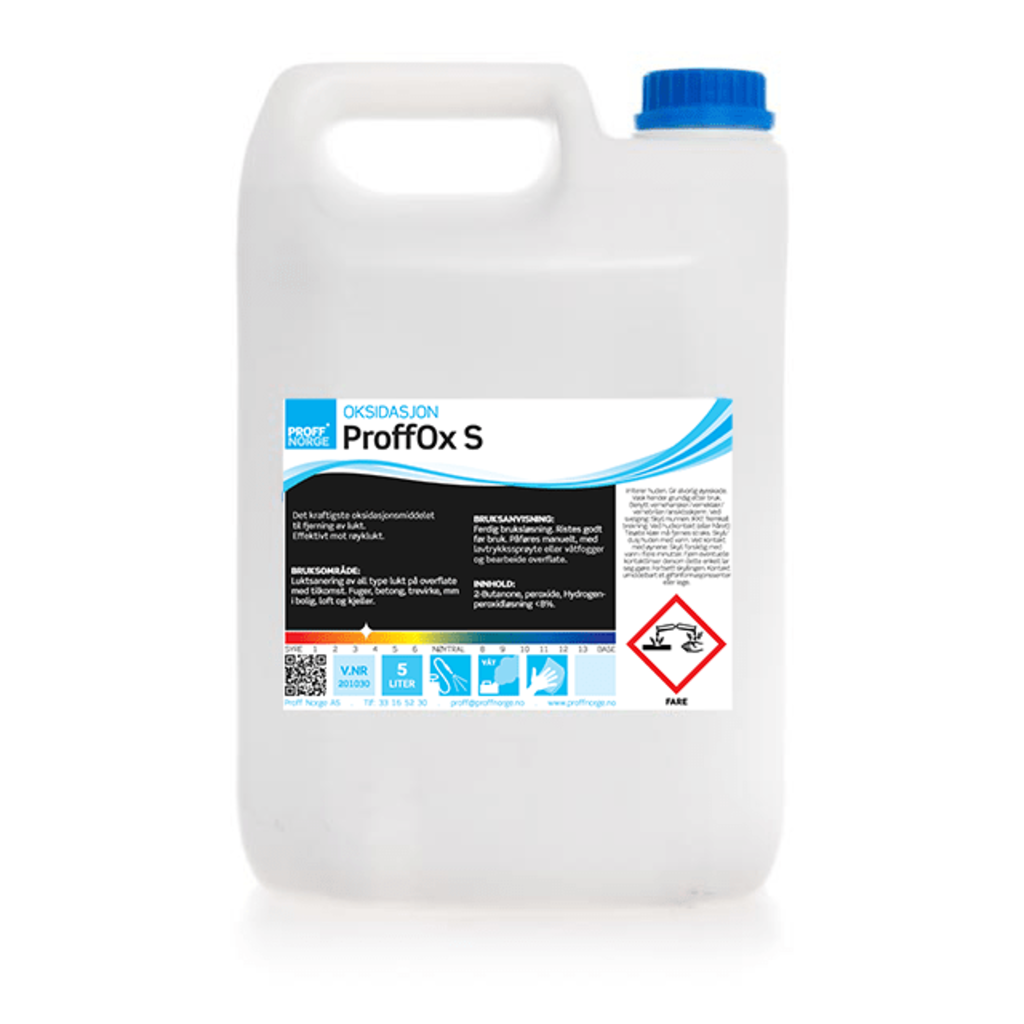
Once the surfaces have been cleaned, odour removal can begin. Use ProffOx undiluted or diluted 1:2 on water-resistant surfaces. The product must not be used on textiles. For deeper odours in porous materials, use ProffOx S – the strongest variant, which is used as a ready-to-use solution.
Odour removal should always be carried out after cleaning. If soot and fire debris are still present on the surface, the odour will often return. Assess the result once the area is completely dry and has been well ventilated.
Why ‘dry before wet’ – and ‘hot before chemistry’?
One of the most common mistakes when dealing with soot damage is to start using water too early. Loose soot can often be removed using a dry chemical cloth and an H-class vacuum cleaner. If you use water first, the soot can be rubbed into the surface. This makes it harder to remove and increases the risk of streaks and discolouration. Work from top to bottom to prevent soot from falling onto areas that have already been cleaned.
Temperature also affects the effectiveness of the cleaning process. When rooms and materials are at around 25 to 30 °C, the chemicals work more effectively. Colder surfaces can reduce effectiveness and make it harder to remove soot, grease and fire residues. At the same time, you should never heat the chemicals directly – warm up the room and the surfaces, and switch off the fan heater before spraying or fogging.
The products in the method
The method utilises products with different functions: Smoke Clean for soot from vegetable fat and oil fires; Proff Nautilus for soot, fire damage and dirt where mineral oil is part of the problem; ProffOx for odour removal on water-resistant surfaces; and ProffOx S for deeper odours in porous materials. Chemical wipes and an H-class industrial vacuum cleaner are used for dry cleaning prior to the application of water and chemicals, and a fan heater is used for controlled heating.
Cleaning products for soot and fire damage
Odour remediation

Dry cleaning and heating equipment


When will the job be finished?
Do not assess the result until the surfaces are dry and the room is well ventilated. The job can be considered complete when:
- Damaged materials that cannot be salvaged have been removed
- Loose soot has been removed whilst dry
- The surfaces have been cleaned with the correct product, leaving no visible traces of soot or dirt
- Odour treatment has been carried out following cleaning
- The odour has been assessed after complete drying and ventilation
- The need for soot level 3 has been assessed
If the smell of smoke is still deeply embedded in cavities, ventilation systems or building structures, you should move on to the method for soot level 3.
In a nutshell
Soot level 2 requires the correct sequence of steps. First, remove any materials that cannot be salvaged. Dry-clean loose soot before using water. Heat the room and materials in a controlled manner. Choose a cleaning agent based on the type of fire and the surface. Only remove odours once the surfaces are clean.
Use Smoke Clean for fires involving vegetable fats and oils. Use Proff Nautilus for mineral oil fires and heavy soiling. Use ProffOx on water-resistant surfaces, and ProffOx S for deeper odours in porous materials.
If the damage is less severe, with only a thin layer of soot, the method for soot level 1 That should be enough. If the smell of smoke is still lingering deep within the cavities and structures after a thorough clean, move on to soot grade 3 and dry fogging.