



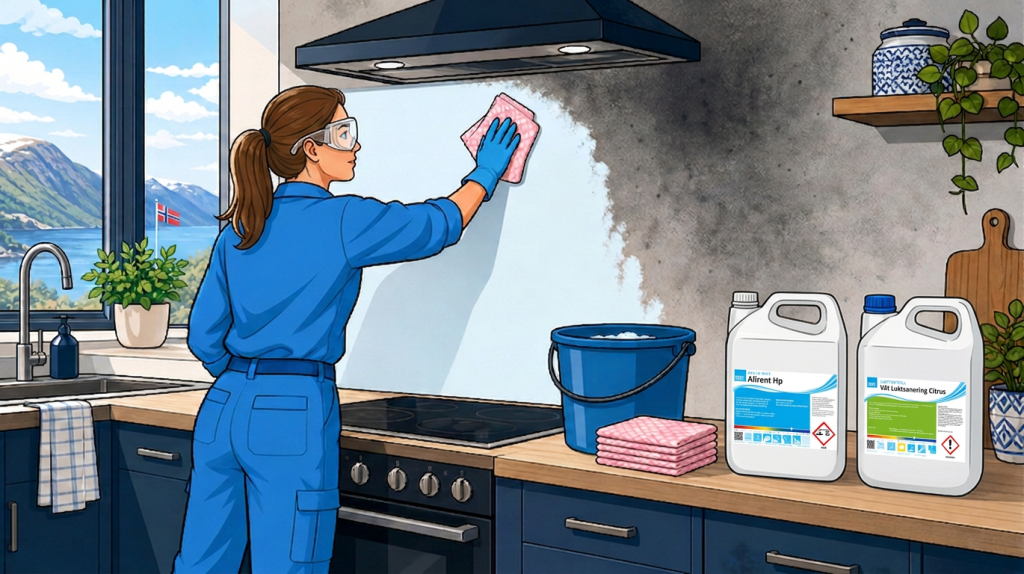
Soot damage grade 1 is the mildest form of soot damage. It may consist of a thin layer of soot caused by burnt food, kitchen fumes, cigarette smoke or back-draft from a pipe.
Even if the damage is minor, the order in which you carry out the steps is important. If you start straight away with water, loose soot can be rubbed into the surface and become more difficult to remove. That is why the method begins with wiping the surface dry before washing.
This article shows you how to clean up simple soot and smoke damage in five steps, using the correct mixing ratios and product selection.
At soot level 1, the damage is often limited, but you should still proceed with caution.
Important before you start
- Wear gloves and safety goggles, and ensure there is good ventilation
- Do not mix chemicals with other substances
- Always test on a small, inconspicuous area first
- Take extra care on polished floors, as Allrent HP may dull the surface
- Always start by wiping the surface dry if there is loose soot on it
If the soot is stuck, or the smell is still noticeable after washing and airing, the damage should be assessed as soot level 2.
Download the methodology poster as a PDF
Would you like the whole method summarised on a single page? Download the method poster for soot level 1. It contains five steps, mixing ratios and a checklist for verification – designed to be printed out and used on site.
The three levels of soot
Before you start, it’s a good idea to check just how much soot you’re actually dealing with.
| Degree | Characteristics | Method |
|---|---|---|
| Soot grade 1 | A thin, loose layer of soot on otherwise undamaged surfaces | Dry wiping and washing |
| Soot grade 2 | Stubborn soot, discolouration, charring or odours in materials | Dry cleaning, washing and odour removal |
| Soot grade 3 | Smell of smoke in cavities, structures or areas to which there is no physical access | Dry fogging after a thorough clean |
The rule of thumb is simple: if the soot can be wiped off with a dry cloth, it is usually soot level 1. If it is stubborn, or if the smell does not go away after washing and airing the room, you should move on to soot level 2.
Quick product selector
| Needs | Product |
|---|---|
| Dry removal of loose soot | Chemical wipe |
| Removing soot from washable surfaces | All-purpose HP |
| Additional odour reduction where required | Wet Odour Removal – Citrus |
Five-step surface cleaning
The aim is to remove the soot without rubbing it deeper into the surface.
1. Remove the source
Start by removing anything that is still emitting soot or odours. This may include burnt food, ash, loose debris, damaged materials or other waste resulting from the incident. Cordon off the work area to prevent soot and dust from spreading further.
The sooner the source is removed, the easier the rest of the cleaning will be.
2. Dry clean first
Wipe away loose soot and dust with a dry chemical cloth. If necessary, you can vacuum using a suitable vacuum cleaner, preferably one with a HEPA filter. Work calmly and methodically so that you do not stir up soot into the room.
Do not use water at this stage. Water can smear soot around and make the damage more visible.
3. Mix the washing-up water correctly
Once loose soot has been removed, you can prepare the cleaning solution. Use Allrent HP at a ratio of 1:50 – this corresponds to approx. 20 ml per litre of water. If odour reduction is required, you can add Våt Odour Remover Citrus at a ratio of 1:10, which is approximately 100 ml per litre of water.
Measure out the quantities accurately. A mixture that is too strong does not necessarily produce better results and may put unnecessary strain on the surface.
| Water | All-purpose HP | Wet Odour Removal – Citrus |
|---|---|---|
| 1 litre | 20 ml | 100 ml, to be used only when odour reduction is required |
| 5 litres | 100 ml | 500 ml, to be used only when odour reduction is required |
4. Wash systematically
Test the mixture on a small, inconspicuous area before cleaning the entire surface. Clean all washable surfaces from top to bottom using a clean cloth or mop. Change the cleaning water frequently to avoid spreading soot back onto the surface.
Repeat the cleaning process until the cloth no longer picks up any soot. Take particular care with areas where a layer of soot is difficult to see, such as light-coloured walls, cupboard fronts, skirting boards and smooth surfaces.
5. Check and finish
Leave the surfaces to dry completely and ventilate the room thoroughly. Then check the result in good light. Look for soot, stains, discolouration and odours.
Used cloths, mops and waste are handled in accordance with local procedures.
Why dry clean before washing?
Loose soot behaves differently to ordinary dirt. If it is moistened too early, it can become embedded in the surface and be more difficult to remove.
The method therefore begins with wiping down with a chemical-soaked cloth and, if necessary, vacuuming. This removes as much soot as possible before water and cleaning products are used. This is particularly important on painted surfaces, porous materials, wood, mouldings and other surfaces that easily attract dirt.
The products in the method
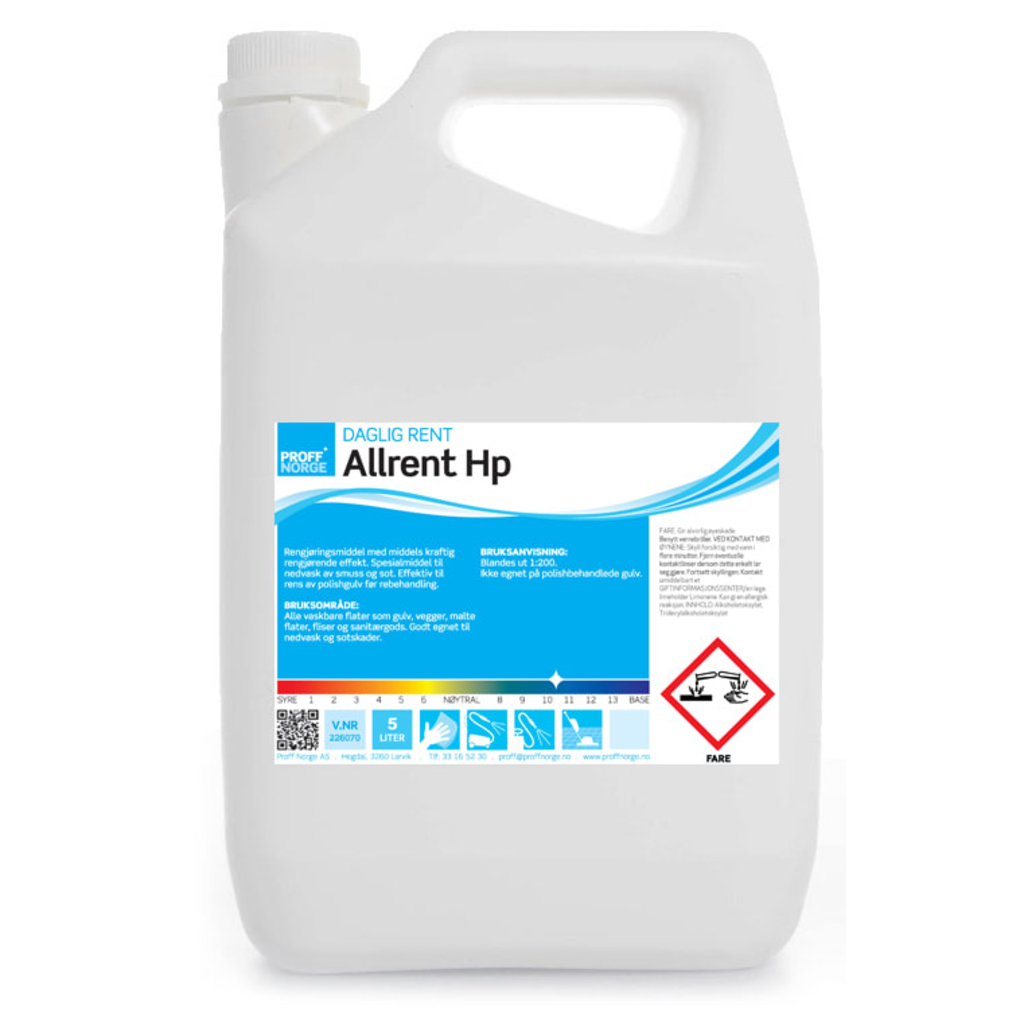
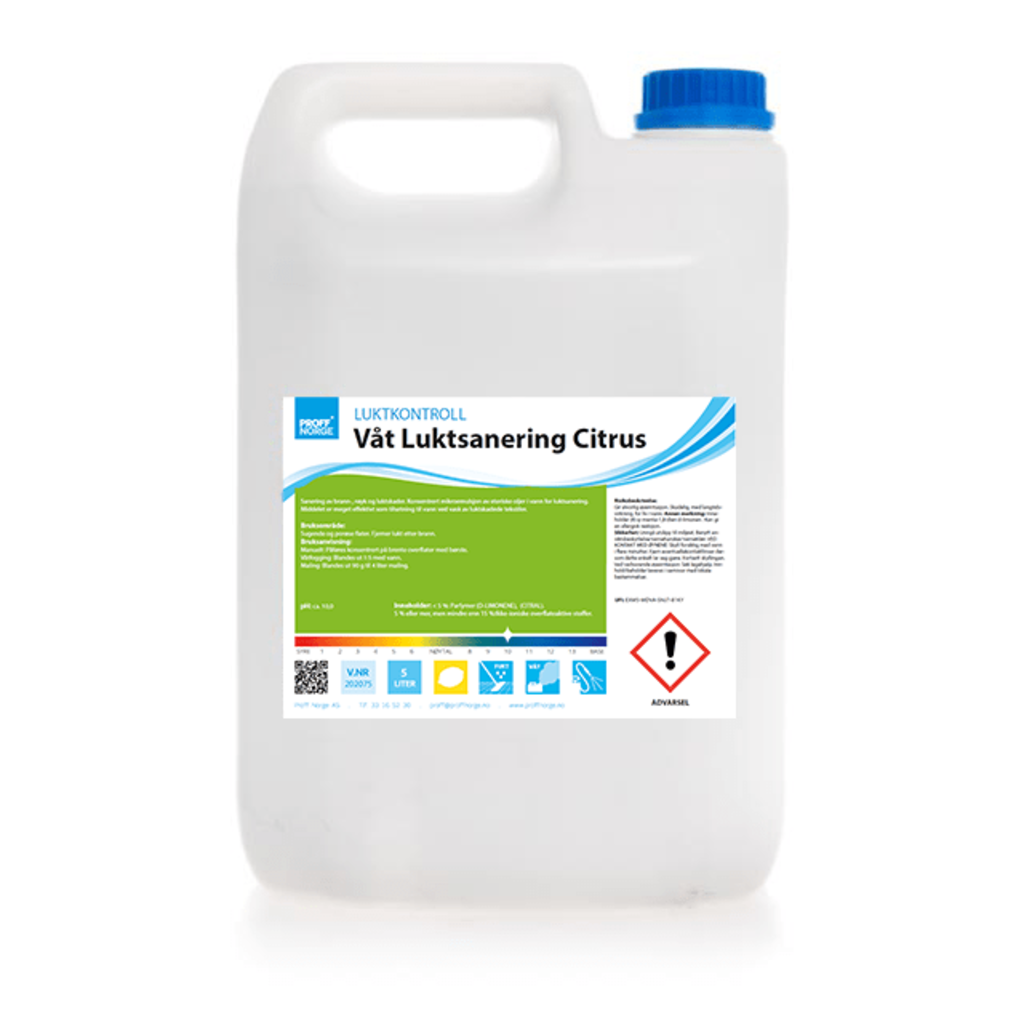
The method for soot level 1 uses three simple products: A chemical wipe is used first to remove loose soot and dust without water. Allrent HP is used to clean washable surfaces, and Wet Odour Removal Citrus is used as a supplement when there is also a need to reduce a mild smoky odour.
Products for soot level 1

When will the job be finished?
Do not assess the result whilst the surfaces are still damp. Wait until they are dry and the room has been ventilated. The job can be considered complete when:
- The source of the soot and odour has been removed
- Loose soot has been wiped away before washing
- The surfaces have been cleaned thoroughly, and the cloth no longer picks up soot
- There is no visible soot film or stains
- There is no distinct smell of fire or smoke after drying
- The damage shows no signs of soot level 2
When is soot level 1 not sufficient?
Soot grade 1 applies only when the damage is superficial. Proceed to soot grade 2 if the soot is firmly attached, the surface is discoloured, materials are charred, melted or damaged, the smell is still noticeable after washing and airing, or the smell of smoke has penetrated porous surfaces.
In the event of serious damage where the odour is trapped in cavities, ventilation systems or structural elements, the method used is soot level 3 once the cleaning has been completed.
In a nutshell
Soot Level 1 refers to light soot and a smell of smoke on the surface. First remove the source, wipe away loose soot with a chemical wipe, and then clean systematically with Allrent HP. Use Wet Odour Removal Citrus if extra odour reduction is required.
Do not start with water until loose soot has been removed. This is the key difference between an easy and a difficult cleaning job. If you are unsure whether the damage is still at soot level 1, you should test a small area first. If the soot is stuck or the smell returns, proceed to soot level 2.