



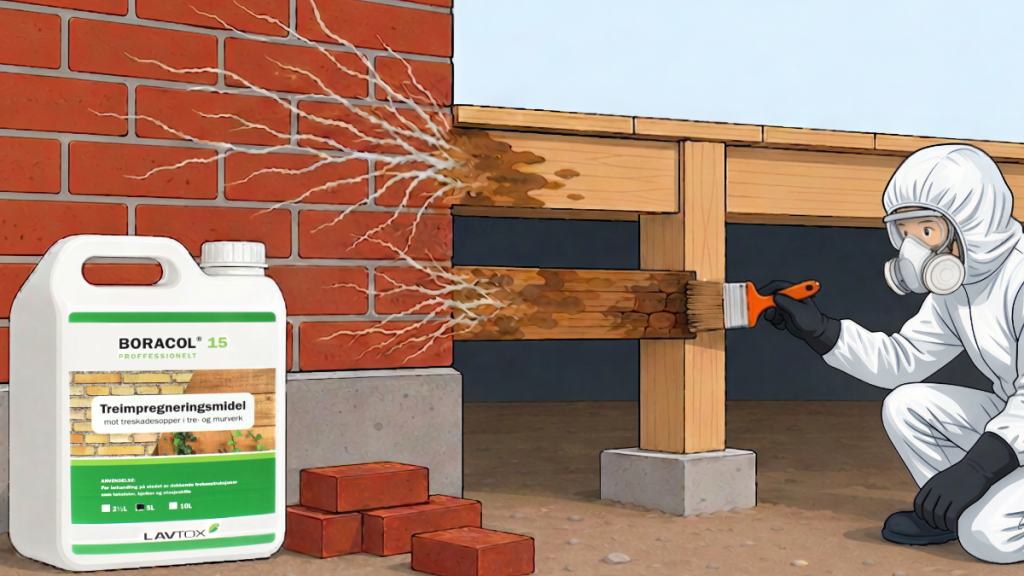
Real house fungus is one of the most serious forms of rot damage that can occur in a building. It does not just attack timber. It can also send mycelial strands through brickwork, plaster and concrete to reach fresh timber, and can therefore appear a long way from where the infestation began.
This guide shows you how to identify the damage, why the full extent must be assessed before treatment, and how to use Boracol 15 on both timber and masonry.
Why is dry rot worse than ordinary rot?
Because it moves. Most rot fungi depend on being embedded in damp wood to survive. The common house fungus, Serpula lacrymans, forms mycelial strands that transport water and can grow through brickwork and concrete to reach healthy wood in a completely different part of the building.
The strands can become as thick as a pencil, and under favourable conditions the infestation can grow by up to 1.5 metres a year. That is why you cannot simply treat what you can see: if you cut out the rotten beam and leave the rest, the infestation may already have taken hold in the adjacent wall.
It is also resilient. The common house fungus can lie dormant for up to ten years and re-emerge when the damp returns. Therefore, it is the source of the damp that determines whether the job is done, not whether the fungus looks dead. The figures are taken from Bergen Housing Inspection.
Important things to know about the common house fungus
- It can spread unseen within structures, behind cladding and beneath floors
- The mycelium strands can grow many metres through both wood and masonry
- It can go into hibernation for up to ten years and come back when the damp conditions are right
- That is why the full extent must be assessed before treatment, not just what you can see
How to recognise the injury
Four types of damage occur in the same structures and are often confused. They do not require the same measures, so it is worth taking a little time to distinguish between them.
The first sign of true dry rot is often a cinnamon-brown, powdery dust in the cellar – spores from the fruiting body. The infestation typically occurs in older wooden houses, old brick tenement blocks, cellars and crawl spaces, and in enclosed structures without ventilation. In old buildings, the lime mortar also provides additional nourishment for the fungus.
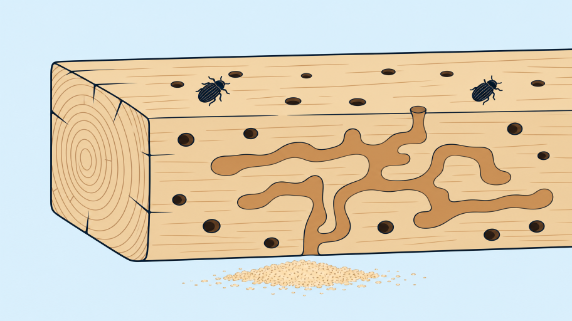
Wood-destroying insects
Round exit holes, tunnels inside the wood and fine bore dust underneath. Often found in older, dry timber in lofts and joist floors.
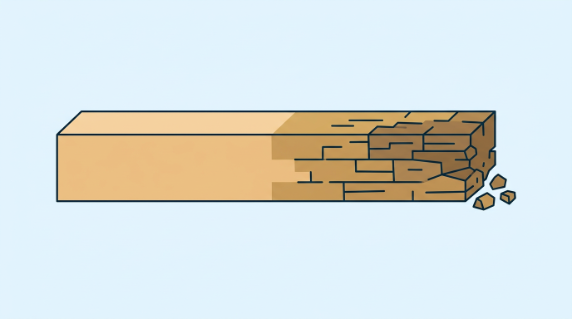
Mould and rot
Discolouration, soft or crumbly wood and a loss of strength, but without cracks extending into the wall. Occurs where the wood is persistently damp.
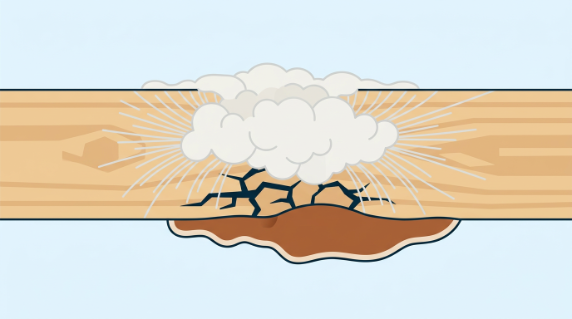
Real house fungus
White, cotton-like mycelium and grey strands. Flat, rust-brown fruiting body with a light-coloured margin. The wood darkens and cracks in a checkerboard pattern.
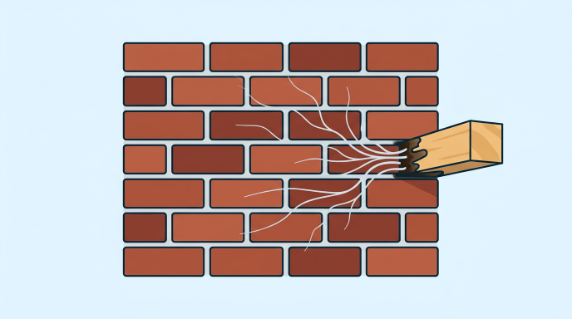
Real house fungus in brickwork
Light-coloured strands emerging from the joints and creeping across the surface of the wall, often from an infested end of a beam into the foundation, render or concrete.
Are you sure it’s a real house mushroom?
This is the question that determines everything that follows. True dry rot is treated differently from ordinary rot: the extent of the damage is usually greater than what you can see; the brickwork must be assessed as well as the timber; and you cannot simply replace the beam that is visibly damaged. If you make the opposite mistake and treat ordinary rot as if it were dry rot, you’ll use far more time and materials than necessary.
The Boracol 15 label is clear on this point: if an infestation is suspected Serpula lacrymans A specialist must be contacted, as thorough measures are required both to confirm the species identification and to assess the extent of the infestation in timber and masonry.
Send in a sample and find out
If you’re in any doubt, there’s no need to guess. A sample of the fungus can be sent in for identification, and the result will tell you whether you’re dealing with a true house fungus or another type of rot-causing fungus.
- Take the sample from the fruiting body or mycelium, not from the wood itself
- Note where in the structure the sample was taken and how moisture enters
- Send it to a laboratory that identifies the species of fungi found in buildings
Mycoteam carries out this type of analysis and is the most common place to send samples from Norwegian buildings. It’s worth taking the time it takes to get the results before you start work – it usually saves you a great deal more work later on.
If you are unsure what the test result means for your treatment, or which products your job requires, get in touch with us. We’ll help you take the next step and put you in touch with a professional in your area if necessary.
Six steps from suspicion to completion of treatment
The order is just as important as the choice of product. If you skip the first step, the infection will return no matter what treatment you use.
- Confirm that it is, in fact, a genuine house fungus. The treatment is different from that for ordinary rot, so you should identify the species before taking any further action. See the characteristics listed above, and have the specimen identified if you’re in any doubt.
- Find and stop the source of the damp. Leaks, poor drainage, condensation or rising damp. If the damp is not removed, the problem may recur.
- Assess the extent in both timber and masonry. Use moisture measurement to determine how far the damp actually extends, not just where the damage is visible.
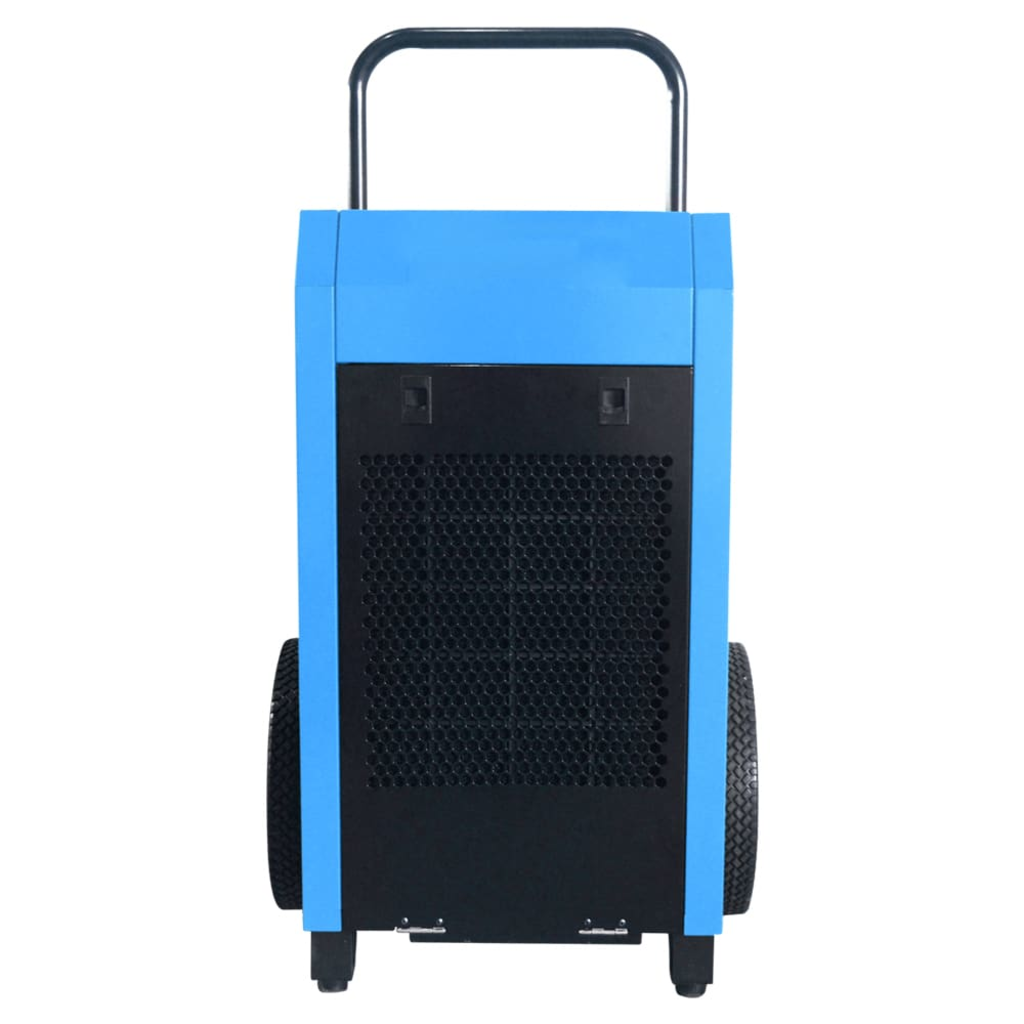
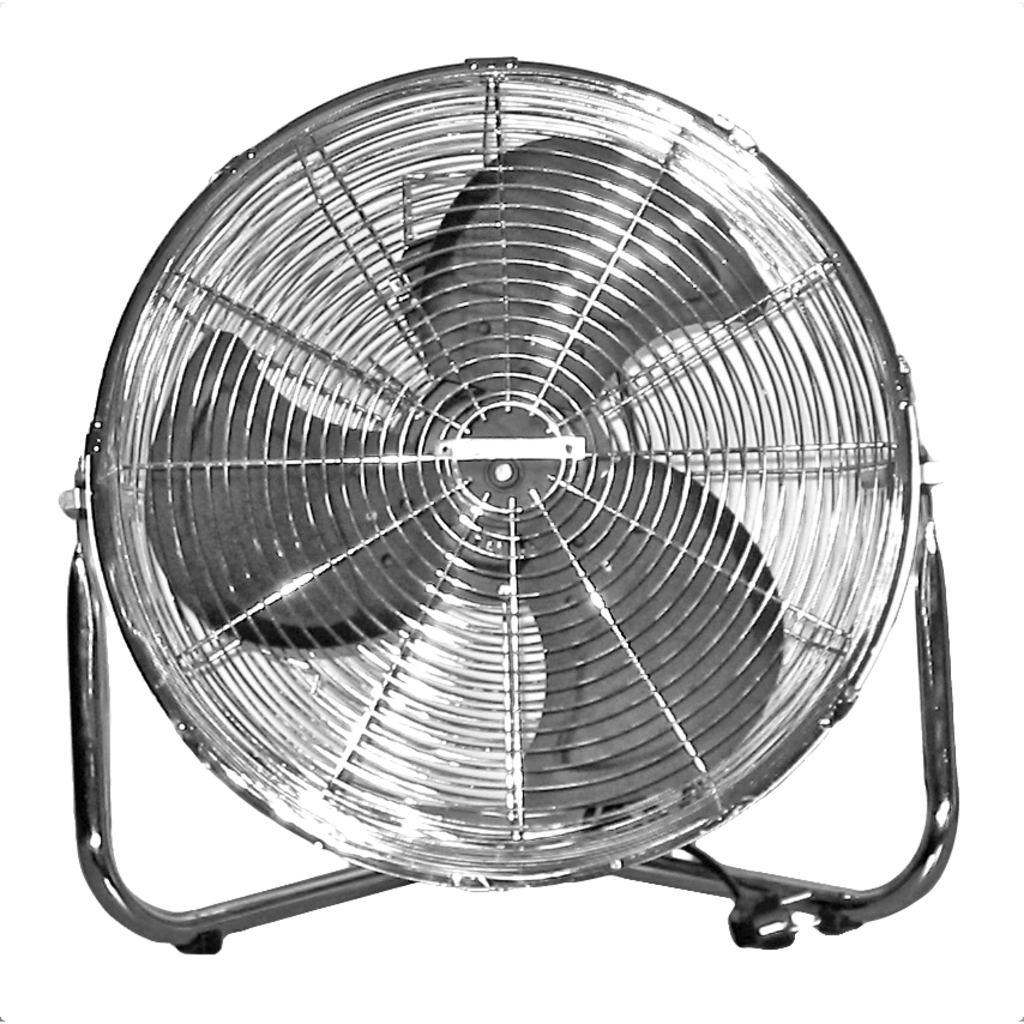
- Dry out the structure. One dehumidifier and a bit of air circulation removes the damp that made the infestation possible in the first place.
- Remove any visible fungal growth and severely damaged material, and then treat the affected timber and masonry with Boracol 15.
- Allow the product to be absorbed and take effect as instructed. Check by taking a new moisture reading to ensure that the structure remains dry afterwards.
If you need a comprehensive guide to the initial stages of water and damp damage, you’ll find it in Are you prepared in the event of water damage?
Mapping: aim, don’t guess
A damp meter shows you where the damp is spreading, including behind cladding and under floors. It is the only way to know whether you have identified the full extent of the problem, and the readings also serve as documentation should you need to report the damage.
Moisture measurement and mapping



Drying: remove the cause of the infestation
Real dry rot needs moisture to take hold. If you dry out the structure and keep it dry, you will have removed the conditions necessary for the infestation to return. A dehumidifier does the hard work, and a fan ensures that the damp air actually reaches the dehumidifier rather than lingering in corners and along surfaces.
Dehumidification and air circulation

Boracol 15: what it is authorised for
Boracol 15 is a wood preservative for professional use, approved by The Norwegian Environment Agency under approval number NO-2021-0210, product type PT08 – wood preservatives. It replaces Boracol 20, which is no longer available for purchase.
The approval covers three areas of use: the preventive treatment of timber against wood-destroying fungi, the preventive treatment of timber against rot fungi, and the treatment of masonry against dry rot to prevent adjacent timber from being attacked. The latter is why the product is suitable for use in the event of a dry rot infestation: it is the wall that is treated, so that the fungus cannot spread further into healthy timber.
| Approval number | NO-2021-0210, PT08 timber preservatives |
| Area of application | Timber and masonry, indoors only |
| Dilution | Use undiluted, straight from the bottle |
| Application | Brush application or non-pressurised injection |
| Consumption | 157 ml/m², around 6 m² per litre |
| Terms and Conditions of Treatment | 5–40 °C, relative humidity below 90 % |
| Usage class | 1 and 2 |
| Active ingredient | Boric acid 16.5 % w/w (198 g/l) |
| Packaging | 5 litres and 15 litres |
| Terms and conditions of purchase | Organisation number – for professional use only |
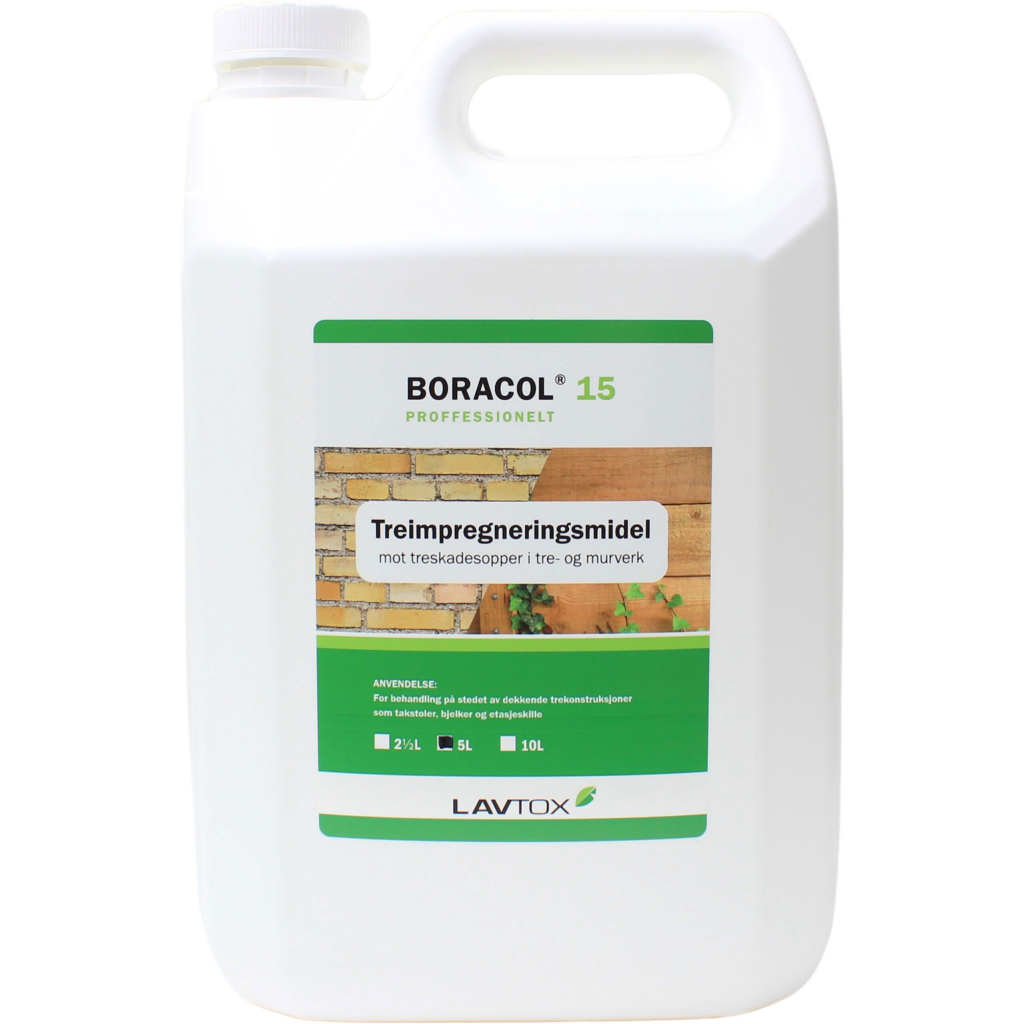
Where is Boracol 15 used?
Wood
Roof trusses, beams, floor joists, sleepers and other load-bearing timber structures. The treatment is applied to the affected and adjacent timber, not just to the part that is visibly damaged.
Brickwork
Brickwork, plaster and concrete affected by dry rot. This is what sets Boracol 15 apart from ordinary wood preservatives: the fungus can grow through the brickwork, in which case the brickwork must be treated to ensure that the timber adjacent to it remains safe.
Areas prone to damp
Cellars, crawl spaces and other rooms where damp accumulates. This is where dry rot most often starts, and it is also where it is left undisturbed for the longest time before anyone spots it.
Personal protective equipment and professional use
For professional use only
Boracol 15 is a biocidal product. You must provide your organisation number when purchasing it. Use biocidal products safely, and always read the label and product information before use.
Protective equipment
The label requires protective gloves, protective clothing and eye protection or face protection. Always ensure there is good ventilation in the room whilst the treatment is in progress. Refer to the safety data sheet for full requirements.
Protective equipment during application

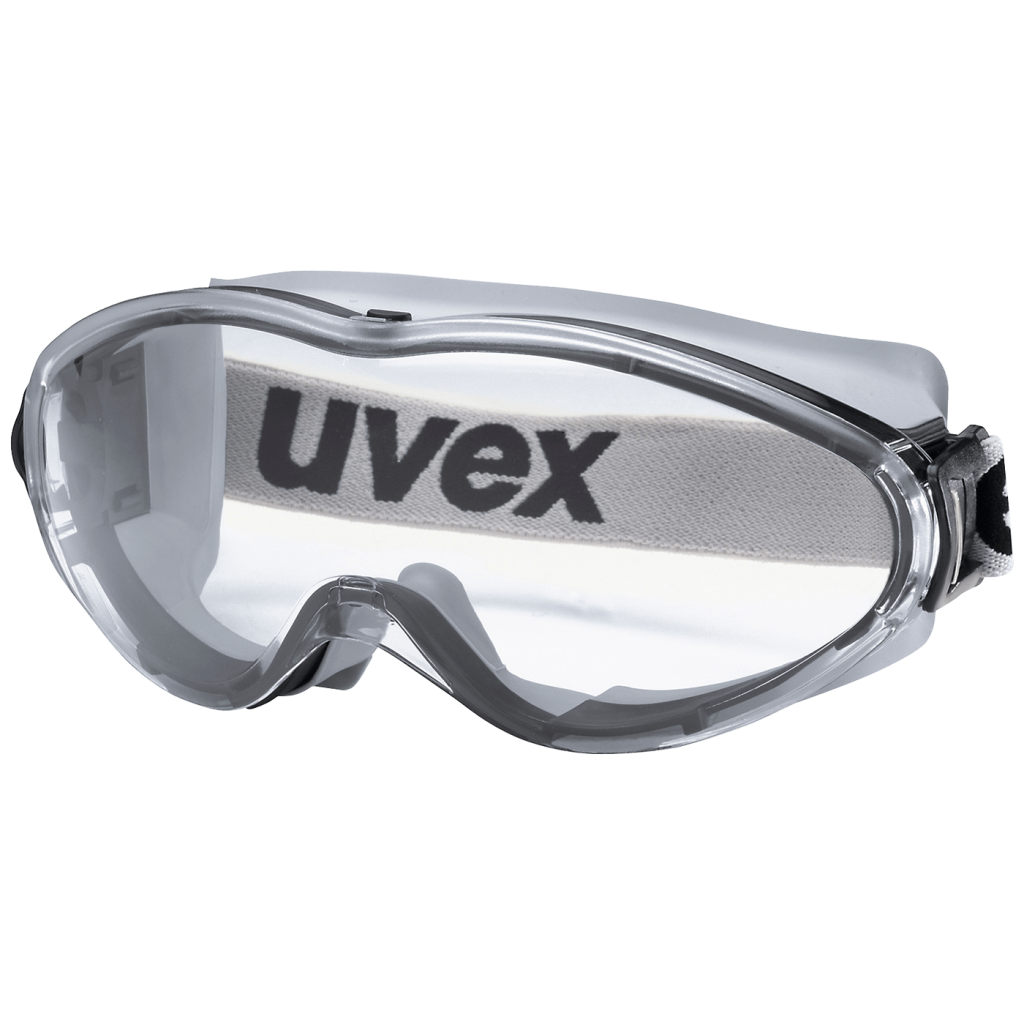

You can find the full range below protective equipment in the online shop.
Frequently asked questions about the common house mushroom
How do I know if it’s genuine dry rot and not just ordinary rot?
Look for mycelium strands emerging from the wood and extending onto brickwork or concrete. Common rot fungi remain within the wood. The wood also cracks open in a coarse cubic pattern, and the fruiting body is flat and rust-brown with a lighter-coloured edge. If in doubt, the infestation should be identified by a professional before you treat it.
Can I treat only the part that is visibly affected?
No. The mycelium can grow for many metres through both timber and masonry, so the infestation may have spread far beyond what you can see. Assess the extent of the infestation in both the timber and the masonry before deciding where to carry out the treatment.
Is it enough to treat the area with Boracol 15 if the damp is still there?
No. The source of the damp must first be identified and stopped, and the structure must be dried out. If you treat a damp building, you have only removed the symptom, not the cause.
Can common house fungus return after treatment?
Yes, if the damp returns. The mould can lie dormant for up to ten years and start growing again when conditions are right. That is why step 2 – finding and stopping the source of the damp – is what determines whether the work will last over time.
How much Boracol 15 do I need?
The label states 157 ml per square metre, which is around 6 m² per litre. A 5-litre container will therefore cover approximately 30 m² of treated surface area. If you are treating both timber and adjacent masonry, the area required will increase rapidly, so measure up before you order.
Can I paint over it afterwards?
Allow the product to soak in and take effect as instructed. Please note that painted and varnished surfaces cannot be treated – the surface must be untreated for the product to soak in.
Who can buy Boracol 15?
For professional use only. You must provide your company registration number at the time of purchase, as the product is approved for professional use.
In a nutshell
Identify the source of the damp, assess the full extent of the problem in both timber and masonry, dry out the structure, remove any damaged material, and treat the affected areas with Boracol 15.
What distinguishes genuine house fungus from other types of rot damage is that it does not stay where you found it. That is why identifying the problem is more important than the treatment itself.
If you wish to explore methods, dosages and health, safety and the environment (HSE) in relation to damage restoration in greater depth, you will find everything you need in From chaos to control: the complete guide to modern damage restoration. If you’re putting together your kit, here’s mini-catalogue for water and damp remediation a complete overview.