



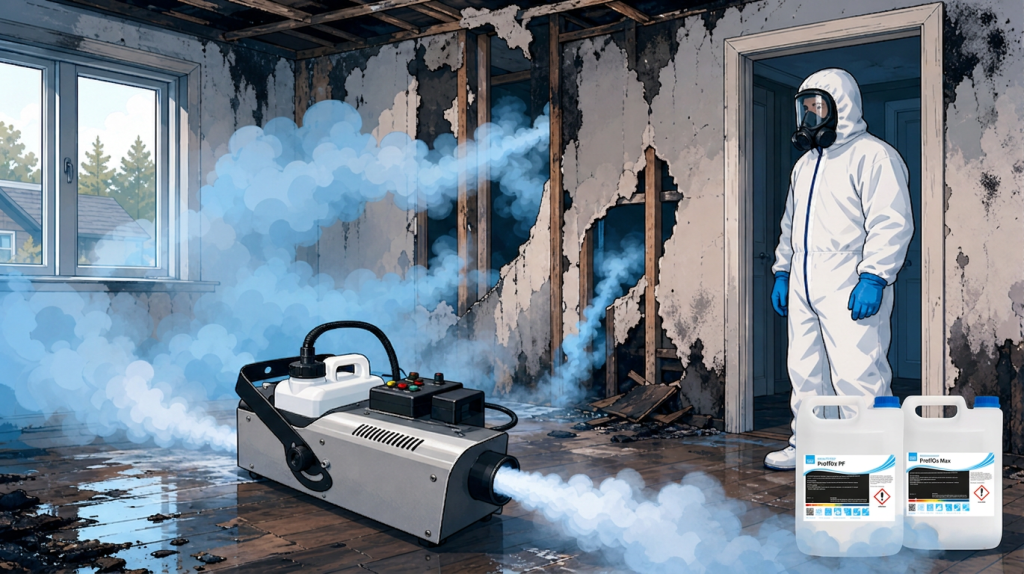
In the case of severe soot, smoke and fire damage, the odour can linger in places you cannot reach with a cloth, by washing or with a wet fogger. It can remain in cavities, ventilation systems, porous materials and structures long after the visible surfaces have been cleaned. This is where dry fogging comes in.
Dry fogging is used as a final odour treatment once everything that can be removed, cleaned, washed and wet-fogged has already been done. It is not a shortcut to avoid cleaning, but the final step when the smell of smoke is embedded deeper than standard methods can reach.
This article deals with soot level 3, i.e. the most challenging fire damage cases where the odour has penetrated into cavities, structures or materials that are difficult to access physically.
Dry fogging must be carried out in a controlled manner and with the appropriate safety precautions. The room must be empty whilst the treatment is taking place.
Important before you start
- Make sure there are no people or animals in the area
- Remove sources of ignition and open flames, switch off the ventilation and close windows and doors
- Move plants and delicate items out of the way or cover them
- Wear a half-mask or full-face mask with an ABEK-P3 filter when working with aerosols, nitrile gloves, safety goggles and a disposable coverall
- Finish soot level 2 before dry fogging is considered
Dry fogging must never be used to cover up soot, dirt or damaged materials that should still have been removed.
Download the methodology poster as a PDF
Would you like the method summarised on a single page? Download the method poster for soot level 3. It shows when dry fogging is used, how to choose the right product, what safety requirements apply, and how to measure out the correct dosage.
When do you use soot level 3?
Soot level 3 is used when the damage is so severe that odours and smoke have penetrated areas that cannot be adequately cleaned by normal washing and damp mopping. Typical signs that soot level 3 may be necessary:
- The smell of smoke lingers after completing soot level 2
- The smell comes from cavities, structural elements or ventilation systems
- Porous materials continue to give off odours even after washing
- The accessible surfaces have been cleaned, but the room still smells of fire or smoke
- The damage is extensive, and the smell has spread throughout the building
If there is still visible soot, charred material or damaged surfaces that have not been cleaned, you are not yet ready for soot level 3. In that case, you must soot level 2 is completed first.
Quick product selector
| Situation | Recommended product |
|---|---|
| Furnished rooms, household goods, textiles, books and documents | ProffOx PF |
| Extensive fire damage, empty rooms, ventilation and cavities | ProffOx Max |
| Application of dry fog | PN1500 thermal fogger |
Both products are used undiluted.
Dry fogging in five steps
The order is important. Dry fogging works best when the source has been removed and all accessible surfaces have already been cleaned.
1. Confirm that soot level 3 is required
Start by assessing whether the damage actually requires dry fogging. Soot level 3 applies when the odour is deeply embedded in porous materials, cavities, ventilation systems or structures that cannot be reached by wiping, washing or wet fogging.
If the odour is only on washable surfaces, or if there is still visible soot and dirt, you should not start with dry fogging. In that case, the correct next step is more cleaning, not more fog.
2. Remove the source and complete soot level 2
Before dry fogging, anything that can be removed must actually be removed. This means that charred materials, damaged building components and loose sources of odour must be removed. Thereafter, all accessible surfaces must be dry-cleaned, washed and wet-fogged in accordance with the method for soot level 2.
Dry fogging does not remove soot. It treats odours. If soot and dirt are still present, the source of the odour will remain.
3. Prepare and warm up the area
Once cleaning is complete, prepare the room for dry fogging. Remove any sources of ignition, extinguish any open flames, switch off the ventilation system and close the windows. Remove or cover any plants and objects that should not be exposed.
Heat the room and materials to between 25 and 30 °C before treatment. Heat activates the scent and ensures the treatment is more effective on the materials.
4. Choose the right ProffOx product
Choose a product based on the extent of the damage and what is in the room.
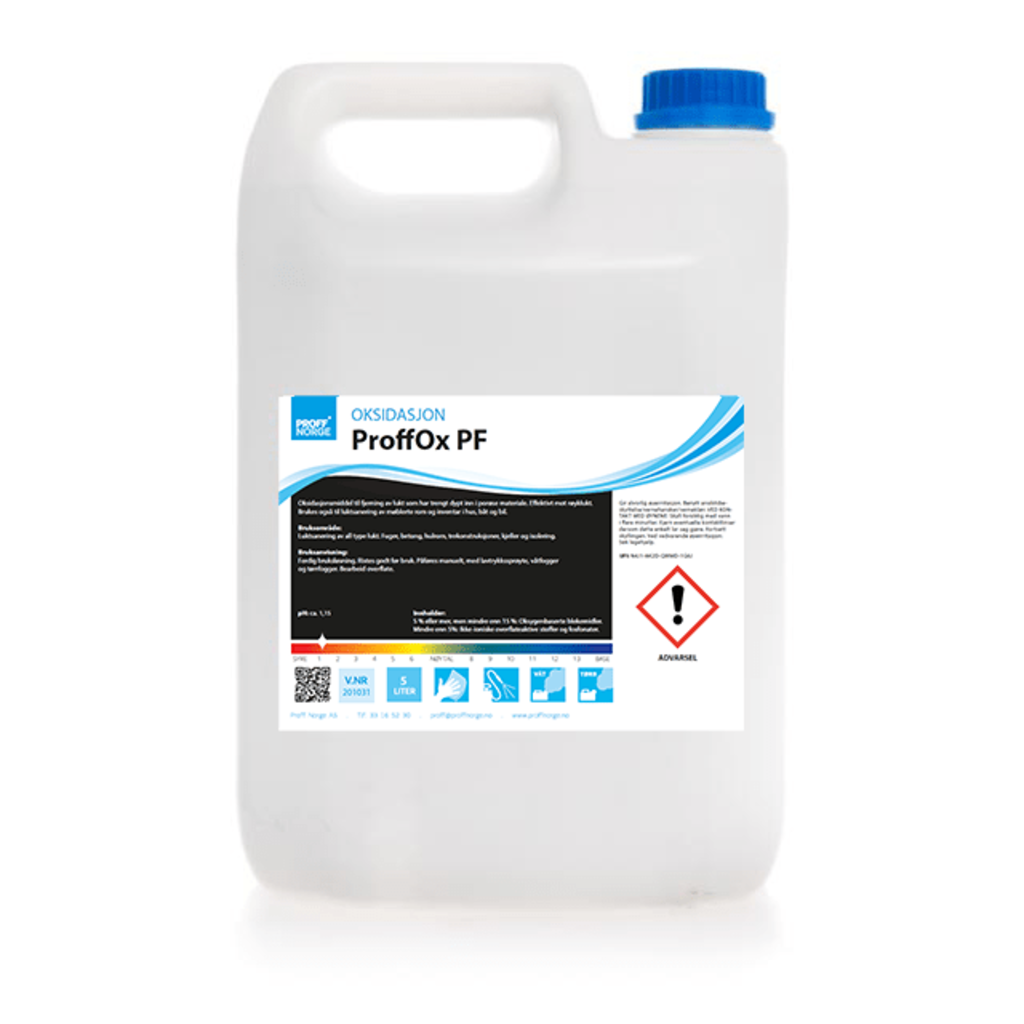
Use ProffOx PF in furnished rooms and areas containing items such as textiles, books, documents and furnishings. This is the product to choose when odours need to be treated without having to remove all contents. Use ProffOx Max for the most severe cases – particularly in empty rooms, cavities, ventilation systems and structures where a more powerful treatment is required.
Both products are used undiluted with the PN1500 thermal fogger.
5. Dry fog, air and controls
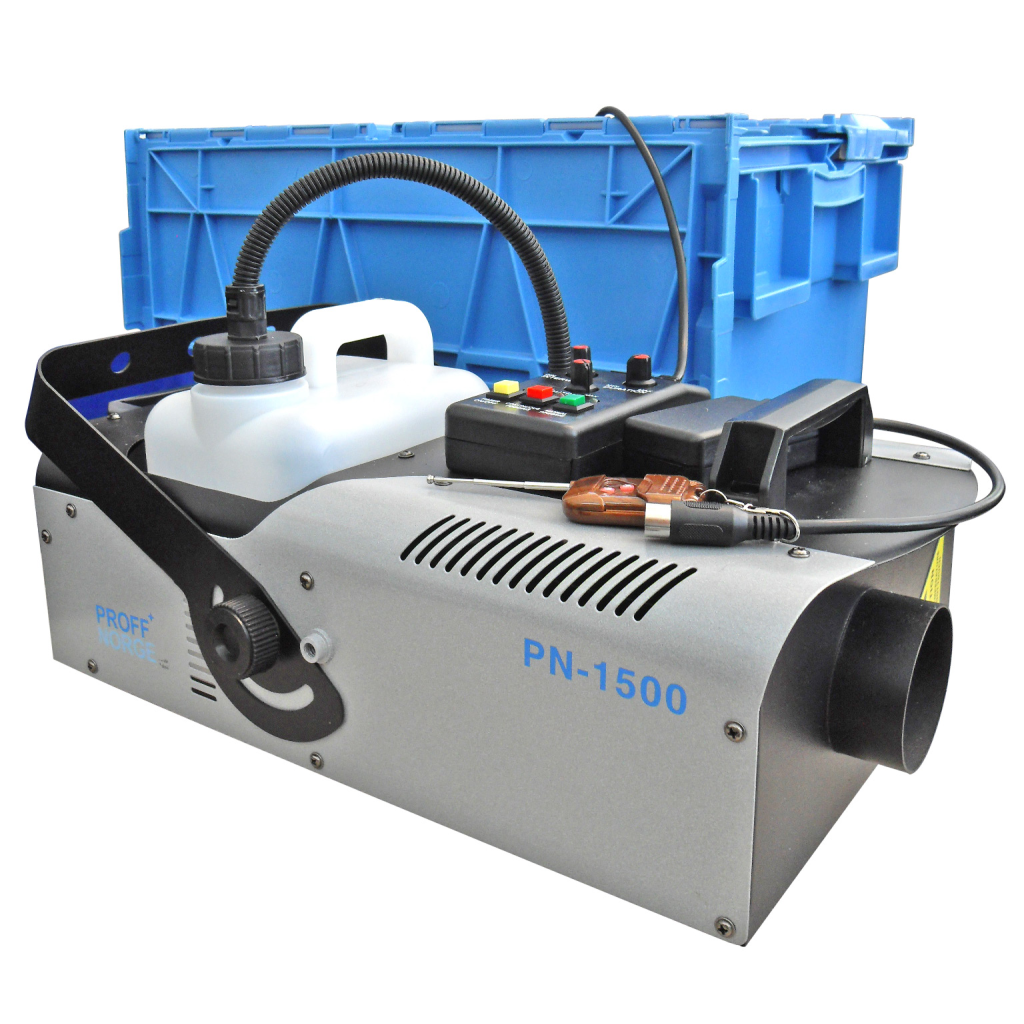
Use 1 litre per 100 m³. Measure the room volume before you start, rather than guessing. Apply the product using a PN1500 thermal fogger. The dry mist consists of very fine particles that can penetrate cracks, cavities, ventilation ducts and porous materials.
After treatment, the area should be well ventilated for 2 to 24 hours, depending on the room, the damage and the odour. Rinse the grout applicator with water for 3 to 4 minutes after use.
Only assess the result once the area has been thoroughly aired and dried. If the smell persists, check whether the source has actually been removed, or whether there are any areas that have not been opened or treated.
How dry fogging works
Dry fogging works because the mist behaves more like smoke than like a normal liquid. The particles are small enough to be carried by air currents into cracks, cavities and porous materials. That is precisely where the smell of smoke often lingers.
When you switch off the ventilation and close the windows, the mist has time to settle and work its way around the room. The aim is for it to reach the same places as the smoke has reached.
However, dry fogging has one important limitation: it does not clean. If there is still soot, grease, charred residue or contamination on the surfaces, the odour may return. Therefore, the correct sequence is always: remove damaged materials and sources of odour, dry-clean accessible surfaces, wash thoroughly, wet-fog if necessary – and dry-fog finally.
The products in the method
The method uses two ready-to-use solutions and one thermal fogger: ProffOx PF where the room is furnished or contains contents that need to be protected as much as possible, and ProffOx Max for the most severe fire damage – particularly in empty rooms, cavities, ventilation systems and structural elements – and the PN1500 thermal fogger to disperse the product as a dry mist.
Dry fogging

When will the job be finished?
Do not assess the result too soon. The smell of smoke must be checked once the room has been aired and the materials are dry. The job can be considered complete when:
- Charred and damaged materials have been removed
- Soot Level 2 has been completed, and all accessible surfaces have been cleaned
- The room has been dry-plastered using the correct product and dosage
- The area has been well ventilated following treatment
- The odour has been assessed after complete drying and ventilation
- There are no new odours coming from cavities, ventilation systems or structural elements
If the odour is still noticeable, you should not simply repeat the treatment automatically. First, check whether there are any hidden sources or materials that are still giving off an odour.
In a nutshell
Soot Level 3 concerns the final stage of a severe fire damage incident: the smell of smoke that lingers in cavities, structures and porous materials. Dry fogging is only used once Soot Grade 2 has been completed – this means that damaged materials have been removed, accessible surfaces have been cleaned, and wet fogging has been assessed or carried out.
Use ProffOx PF in furnished rooms and areas containing household effects. Use ProffOx Max for extensive fire damage, empty rooms, ventilation systems and cavities. Both are used undiluted with the PN1500 thermofogger. If you are unsure whether the damage is soot grade 2 or 3, you should first check that all accessible surfaces have actually been cleaned. Dry fogging should complete the job, not replace it.
The entire series: Soot level 1 – surface cleaning for light soot and odours, Soot level 2 – restoration following obvious soot and fire damage, and this article on dry fogging. If you need the same type of treatment for biological odours, see the method in Odour control for biological odours.