



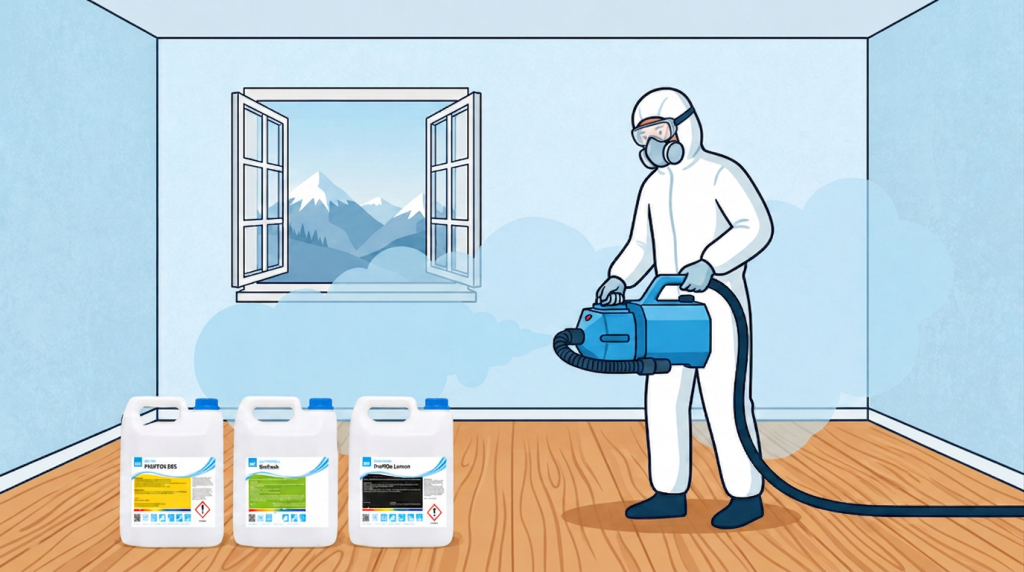
Biological odours caused by death, animal carcasses or rotting food are among the most challenging issues you will encounter in decontamination work. The odour often permeates deep into porous materials, cavities and surfaces that have been in contact with organic contamination.
That is why simply masking the odour is not enough. The source must be removed, the surfaces must be cleaned, and the odour treatment must be carried out in the correct order.
This method explains how to proceed from initial odour treatment to thorough cleaning, disinfection and, in the most severe cases, dry fogging.
Biological odours may pose a risk of infection. The work must therefore be planned and carried out using appropriate personal protective equipment and with the area clearly cordoned off.
Important before you start
- Work will only commence once the person or animal has been removed by the responsible personnel
- Cordon off the area before handling the source, and assess the biological risk
- Wear chemical-resistant gloves, safety goggles or a face shield, full-body protective clothing and shoe covers
- Wear appropriate respiratory protection when spraying or fogging
- Keep unauthorised persons and animals out of the area, and do not mix chemicals
- Switch off ventilation and ignition sources during dry fogging – ensure there are no people or animals in the room whilst fogging is taking place
Download the methodology poster as a PDF
Would you like the whole method summarised on a single page? Download the method poster for biological odours. It contains seven steps, product selection, safety points and a checklist – designed for in-house training and practical use out in the field.
Quick product selector
| Situation | Recommended product or equipment |
|---|---|
| First aid for strong biological odours | Biofresh |
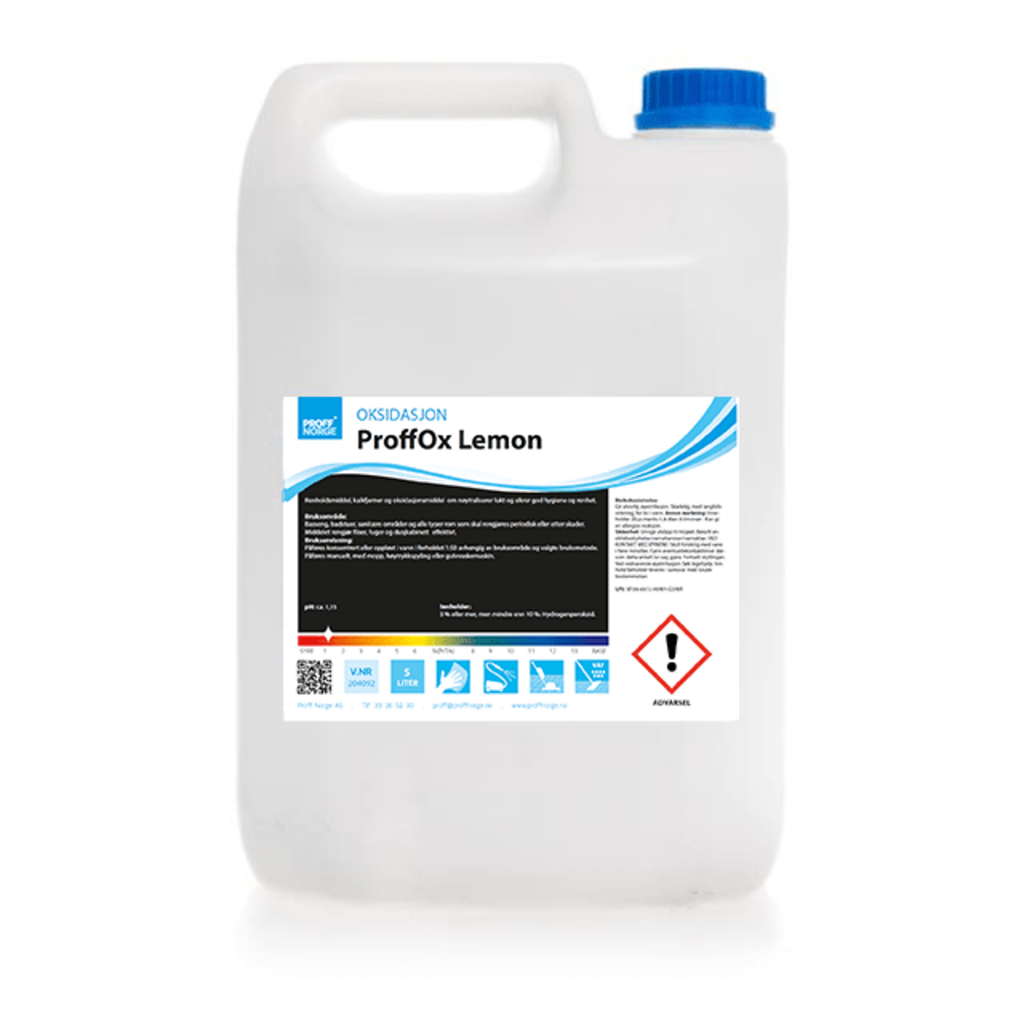
| Thorough cleaning of water-resistant surfaces | ProffOx Lemon |
| Disinfecting cleaned surfaces | ProffOx DES |
| Disinfection of surfaces sensitive to bleach | Proff Elyte |
| Controlled application of chemicals | Low-pressure sprayer or wet fogger |
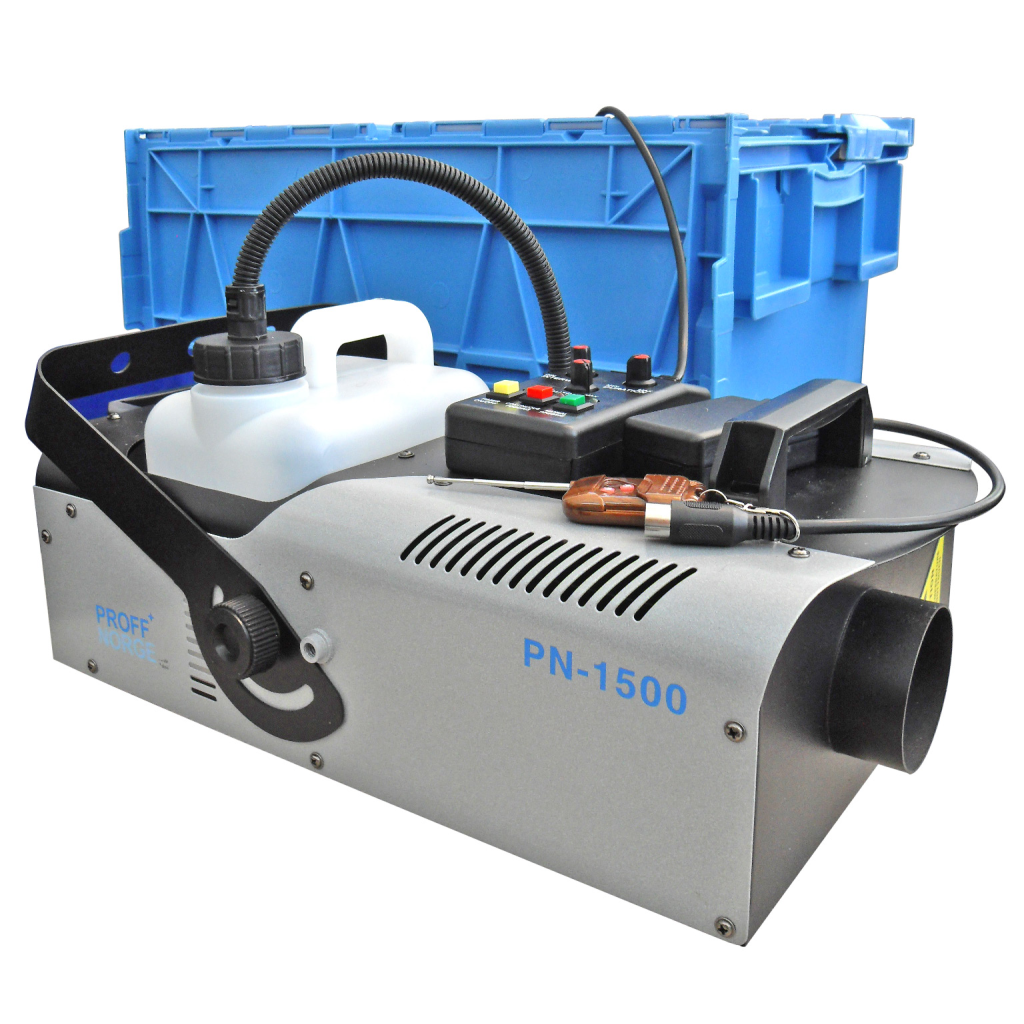
| A lingering, intense odour | ProffOx Max and PN1500 thermal foggers |
Odour removal in seven steps
The order is important. If the source isn’t removed first, the smell will often return, no matter how strong the cleaning products you use.
1. Remove the source and any coarse debris
Start by removing the source of the odour. This could be food residues, liquids, organic matter, damaged materials or porous surfaces that cannot be cleaned properly.
Anything that continues to emit odours or cause contamination must either be removed or assessed for further decontamination. The aim is to eliminate the cause before odour treatment begins.
2. Treat odours with Biofresh
Once the source has been removed, you can begin odour treatment with Biofresh. If necessary, heat the room to approx. 25 °C before treatment – heat activates the odour and ensures the product works more effectively on the materials.
Use Biofresh undiluted or diluted up to a ratio of 1:10. On particularly affected areas, you can use a more concentrated solution. Leave the product to work for 5 to 30 minutes. For strong or deep-seated odours, a longer application time may be required.
3. Wash thoroughly with ProffOx Lemon
After the initial odour treatment, wash water-resistant surfaces thoroughly with ProffOx Lemon. Use the product undiluted or diluted up to a ratio of 1:50, depending on the surface and the level of soiling.
Clean the surfaces mechanically wherever possible. It is important to actually remove organic contamination, not just wet the surface with chemicals. Rinse thoroughly where necessary, particularly before applying Biofresh – Biofresh is not compatible with acidic agents.
4. Disinfect as required
Once the surfaces have been cleaned, they can be disinfected if necessary. Use ProffOx DES, either undiluted or diluted 1:2, on water-resistant surfaces. On surfaces susceptible to bleaching, textiles or more delicate materials, Proff Elyte should be used instead.
Always test on a small area first, and choose a product suitable for the surface. Disinfection should not replace cleaning – it should be carried out after organic matter has been removed.
5. Treat the area again if the smell persists
If the odour is still noticeable after washing, drying and airing, Biofresh can be reapplied.
Before repeating the treatment, you should consider whether there is a hidden source of odour or contamination. The odour may be trapped in porous materials, under floors, behind skirting boards, in cavities or in materials that should have been removed. Do not treat the same surface repeatedly without checking that the source has actually been eliminated.
6. Dry fog for extreme odours
In cases of extreme odours that persist after removal, cleaning, disinfection and after-treatment, dry fogging may be used as a final method. Use ProffOx Max as a ready-to-use solution with the PN1500 thermal fogger.
Use a dose of 1 litre per 100 m³ – measure the volume of the room before you start, rather than guessing. Before treatment, ensure that ventilation is switched off and all ignition sources are removed, and that the room is clear of people and animals. After treatment, ventilate the area thoroughly for 2 to 24 hours.
7. Check and document
Only assess the results once the area is completely dry and well ventilated. Document which surfaces have been treated, which products have been used, the mixing ratios, dosage, exposure time, what has been removed or discarded, and whether further decontamination is required.
If the odour persists, you should check whether the source has been removed, whether porous materials are still emitting odours, or whether the treatment has not reached the area where the odour is coming from.
Key rules of chemistry
- Do not mix chemicals
- Rinse thoroughly before using Biofresh if acidic products have been used
- Biofresh must be allowed sufficient time to take effect
- ProffOx DES is used on water-resistant surfaces – Proff Elyte should be used where ProffOx DES may cause discolouration or be too harsh
- Dry fogging is only used once the source has been removed and the surfaces have been cleaned
Why temperature and exposure time determine the result
Two factors have a significant impact on the result: temperature and exposure time.
The room should be heated to around 25 °C before odour treatment. This activates the odour and allows the chemicals to work more effectively on the materials. On cold surfaces, the process is slower, and the product often penetrates less effectively into the areas where the odour is present.
The application time is just as important. Biofresh should not simply be applied and wiped off straight away. The product should be left to work for 5 to 30 minutes, and in the case of strong odours, it may take longer. If the odour persists after applying the product at the correct temperature and for a sufficient duration, this is often due to a hidden source. In that case, you should look for it before proceeding to dry fogging.
The products in the method
The method uses products that serve different purposes: Biofresh provides an immediate solution to odours and acts as a finishing treatment if the odour persists. ProffOx Lemon is used for thorough cleaning of water-resistant surfaces, ProffOx DES disinfects cleaned surfaces, and Proff Elyte is used on surfaces susceptible to bleaching, textiles and other sensitive materials. A low-pressure sprayer and wet fogger are used for controlled application, whilst ProffOx Max with the PN1500 thermal fogger is used for extreme odours that require a final dry fogging treatment.
Chemicals for odour control, cleaning and disinfection



Application and grouting


When will the job be finished?
Do not assess the result immediately after treatment. Wait until the area is dry and well ventilated. The job can be considered complete when:
- The source of the odour, coarse contamination and organic matter has been removed
- Water-resistant surfaces have been thoroughly cleaned
- Disinfection has been carried out where necessary
- The odour has been assessed following thorough drying and ventilation, with no signs of hidden sources
- Porous materials have been assessed
- Any dry fogging has been carried out and the area has been ventilated
- The treatment has been documented
If the smell returns, you should first look for a hidden source before repeating the treatment.
In a nutshell
Biological odours must be treated in the correct order. Remove the source first. Use Biofresh as a first-aid measure against odours. Wash thoroughly with ProffOx Lemon. Disinfect with ProffOx DES or Proff Elyte if necessary. Follow up with Biofresh if the odour persists. In the case of extreme odours, you can finish by dry fogging with ProffOx Max and the PN1500 thermal fogger, but only once the source has been removed and the surfaces have been cleaned.
If the smell is from urine, faeces or pests, see the method in Urine odours, faeces and pests: how to get rid of biological odours. If the smell is coming from the sewers or drains, see the method in Sewer odour following a drain blockage. If you’re unsure whether the odour is on the surface, in porous materials or in cavities, we can help you choose the right method and equipment.